
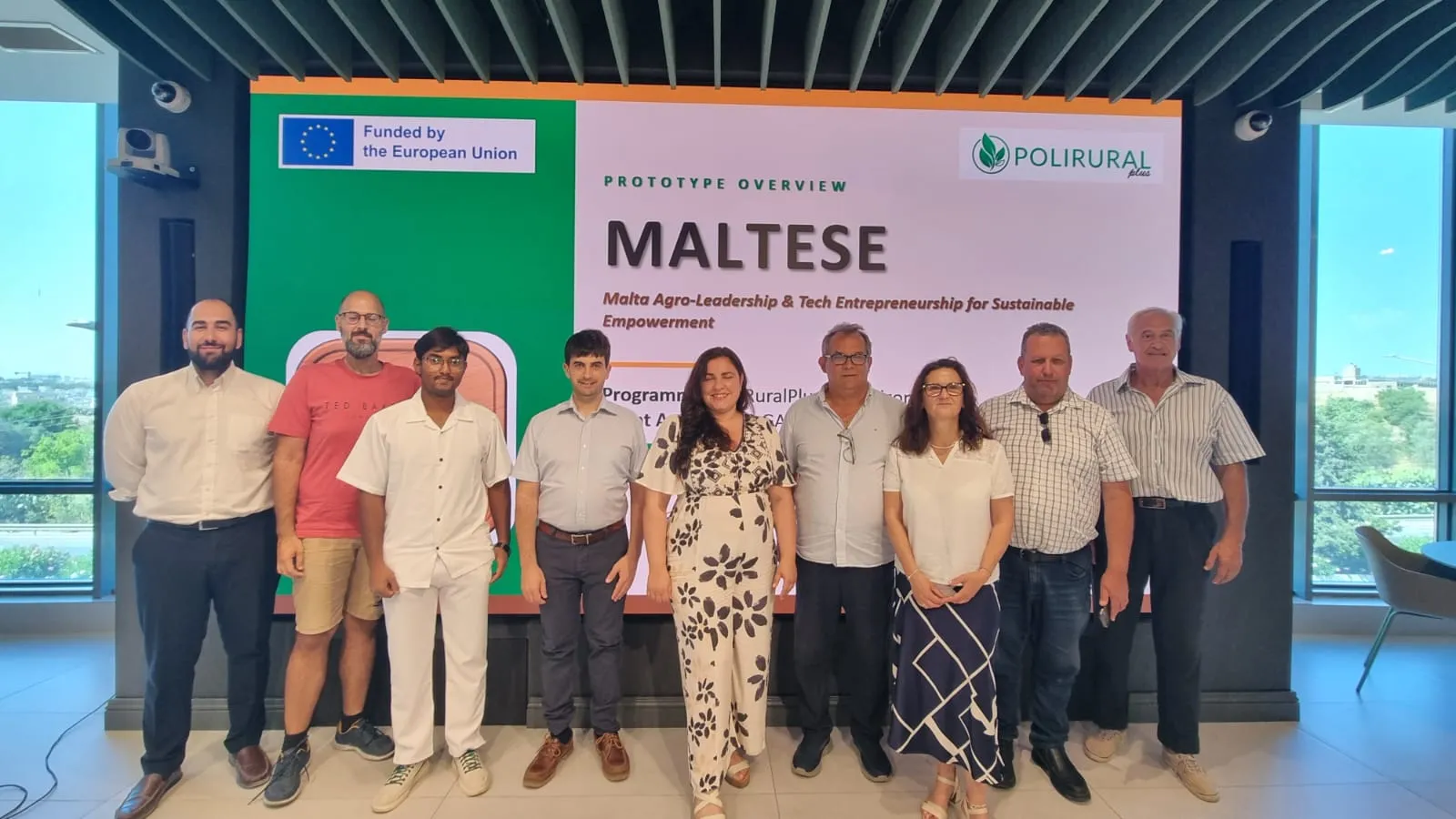
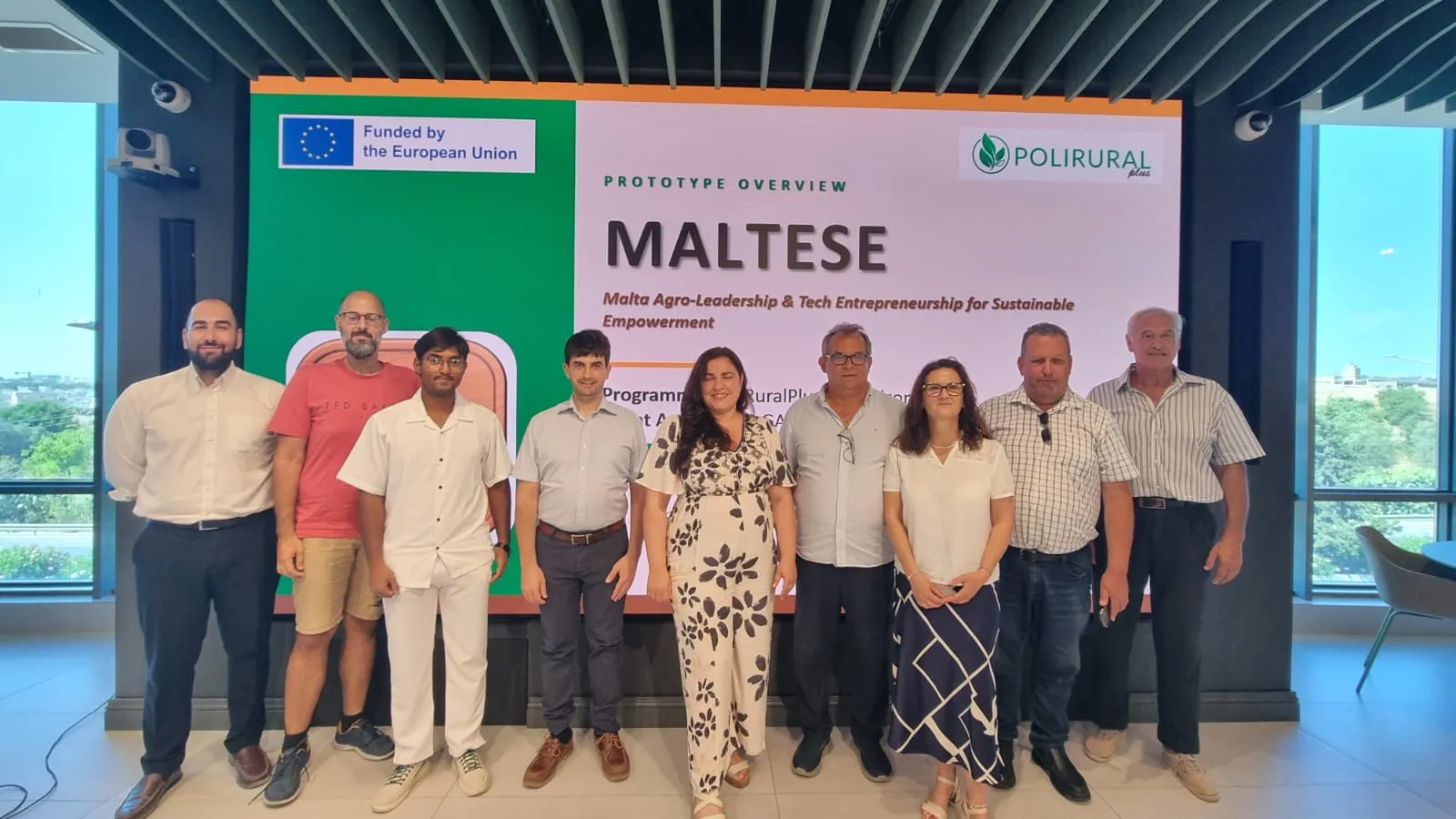
On 25 June 2026, the MALTESE consortium held its Final Dissemination Event at the Malta Digital Innovation Authority in Birkirkara. Organised by PAMEA, SEMABLU and SELFHOOD, with MDIA support and AcrossLimits collaboration, the programme combined institutional perspectives, technical results, training outcomes, participant pitches and an open round table on the future of rural innovation in Malta.
The central question was practical: what has MALTESE produced, what did participants learn, and what conditions are needed for farmers, young entrepreneurs and rural communities to use the results? The discussion showed that technology must be supported by skills, incentives, education and long-term engagement.
A final event built around results and dialogue
The event was opened by Dr. Eng. Daniel AMARIEI of PAMEA, the MALTESE project coordinator, with Thomas ABELA from the Malta Digital Innovation Authority. They welcomed participants and set out the event objectives.
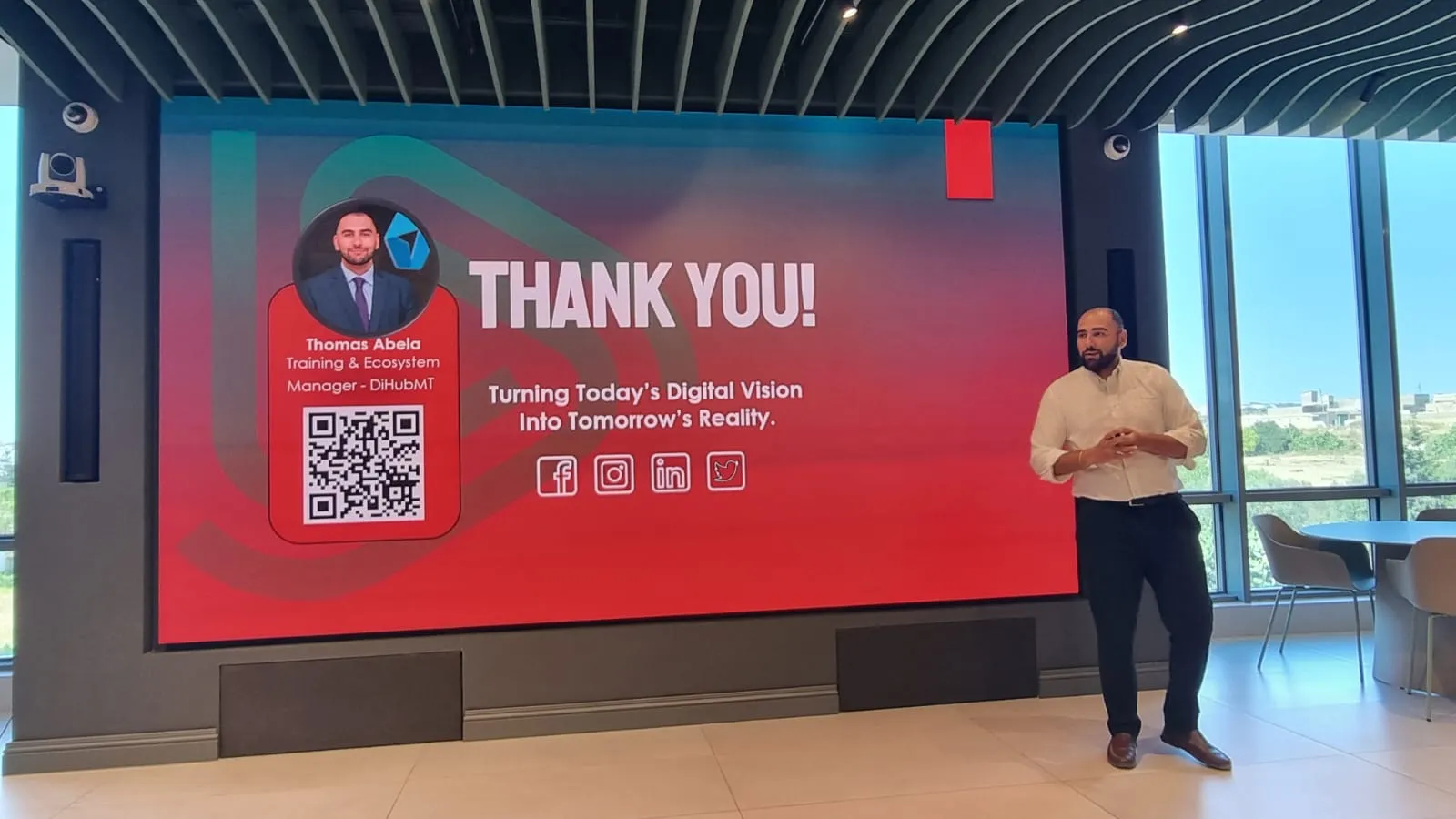
Representing the Malta Digital Innovation Authority - MDIA, Mr. Thomas ABELA welcomed participants and highlighted the importance of connecting digital innovation with Malta’s practical economic, social and environmental needs. His contribution placed the MALTESE project within the wider national discussion on responsible technology adoption, emphasising the value of initiatives that translate digital solutions into accessible tools for local communities, entrepreneurs and rural stakeholders. His presence also reinforced the role of institutional collaboration in supporting projects that move beyond technical experimentation and contribute to long-term capacity building and sustainable development.
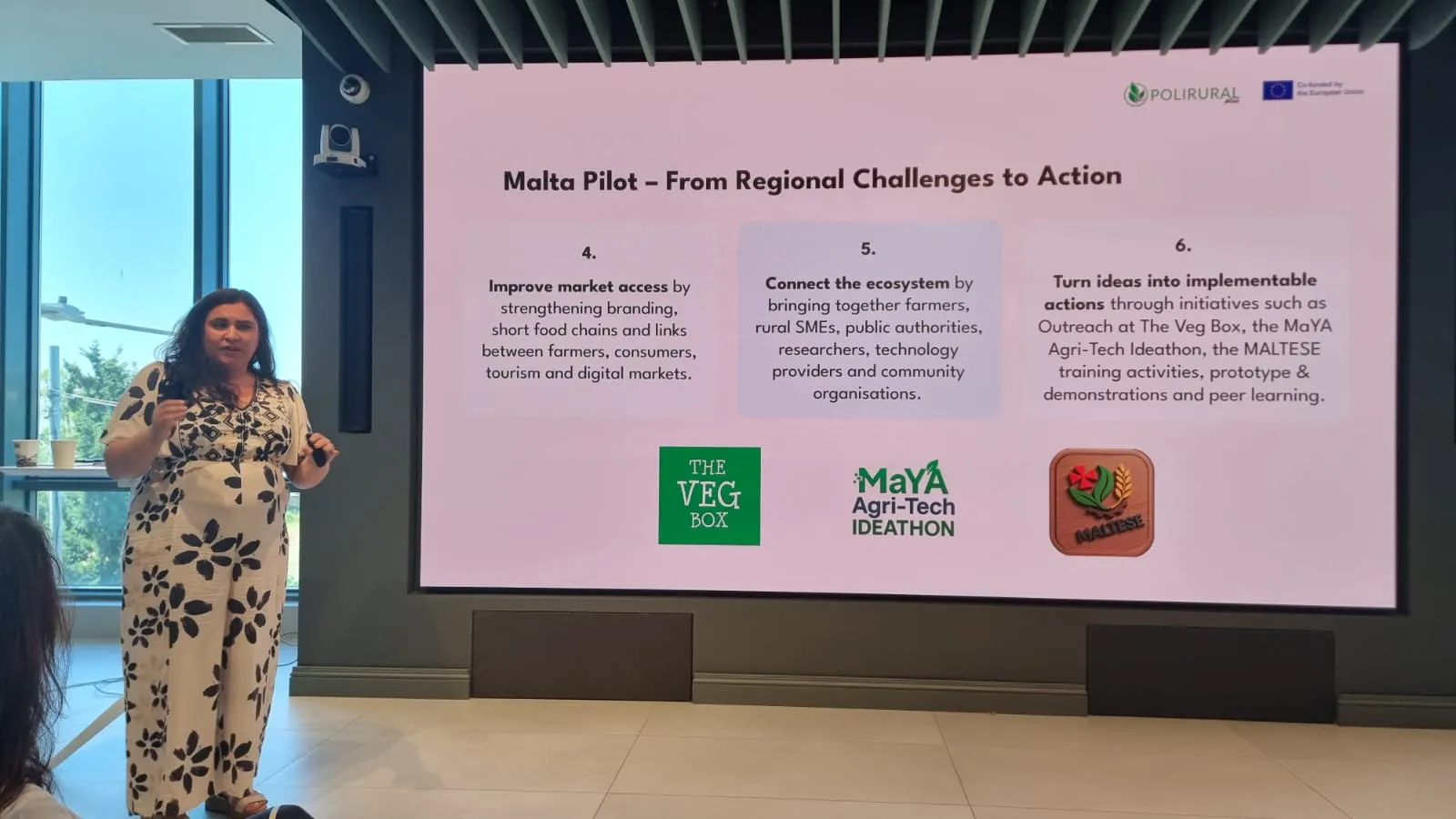
Maria Elena MUSCAT of AcrossLimits positioned the initiative within the wider PoliRuralPlus Malta pilot, connecting the project’s results to Malta’s broader rural and digital innovation agenda.
Dr. AMARIEI presented the project’s objectives, activities and results. MALTESE combined digital tools with capacity building, mentoring, circular agri-business and stronger rural-urban links. Its work moved from technical setup and stakeholder engagement to the Malta training, improvements following the Athens JackDaw Code Camp, and final testing. This sequence showed that the prototype was developed alongside learning activities and participant-led business ideas, not as a separate software exercise.
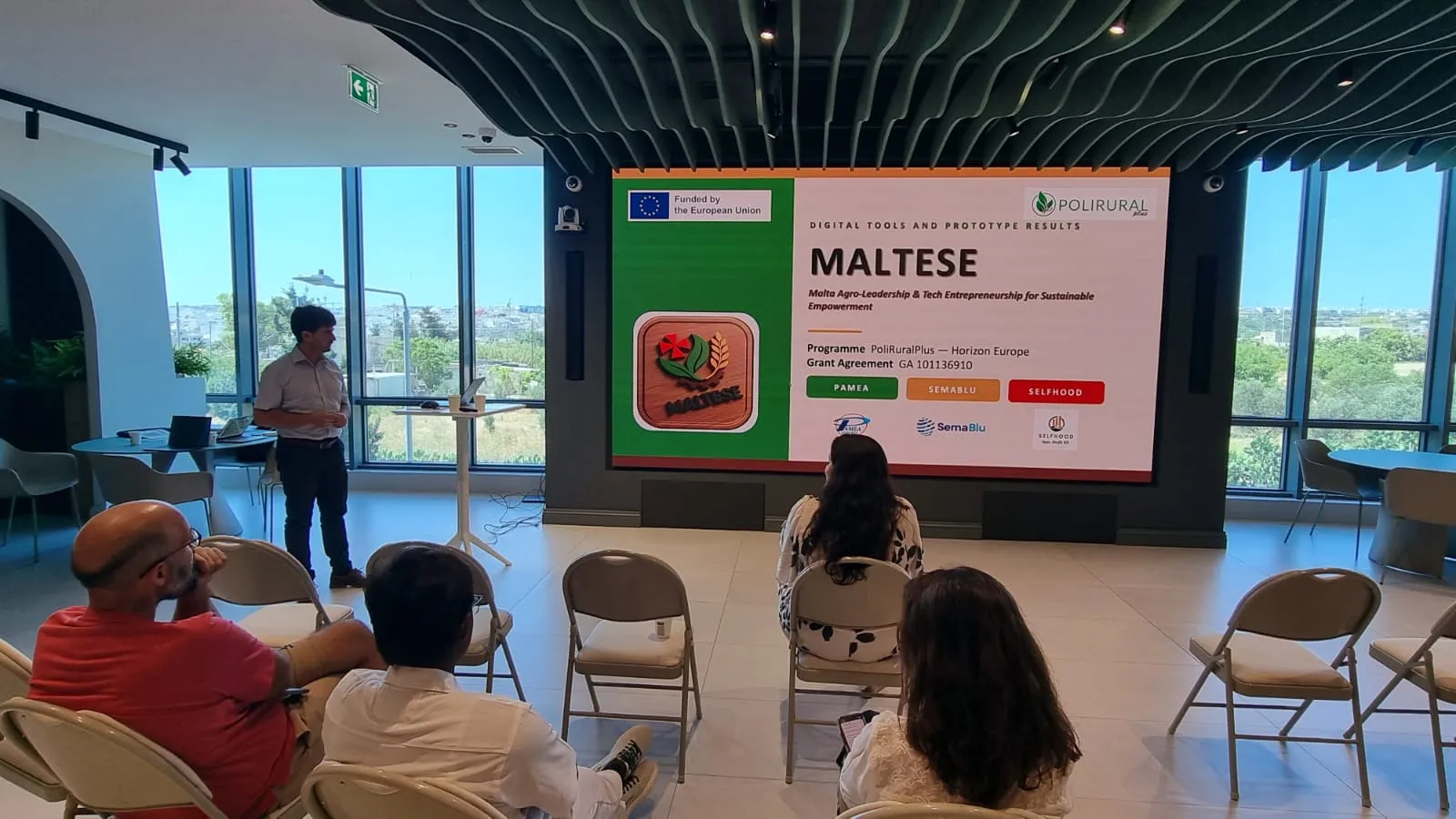
The technical session, led by Gianluca VALENTINO of SEMABLU, presented four connected elements: the JackDaw GeoAI Chatbot, Map Whiteboard, the Rural-Urban E-Market and SMART irrigation. JackDaw draws on Maltese soil, moisture, protected-area and funding information. Map Whiteboard supports collaborative planning, while the E-Market connects producer profiles and products with potential buyers. SMART irrigation links environmental data with more resource-efficient farming decisions.
The presentation also showed how the project reduced technical barriers. Earlier JackDaw access required individual accounts, local setup and manual data-server connection. The improved MALTESE interface handles these processes in the background, so a user can open the application, select an area and ask a question. That change makes the service more realistic for farmers, entrepreneurs, educators and other non-technical users.
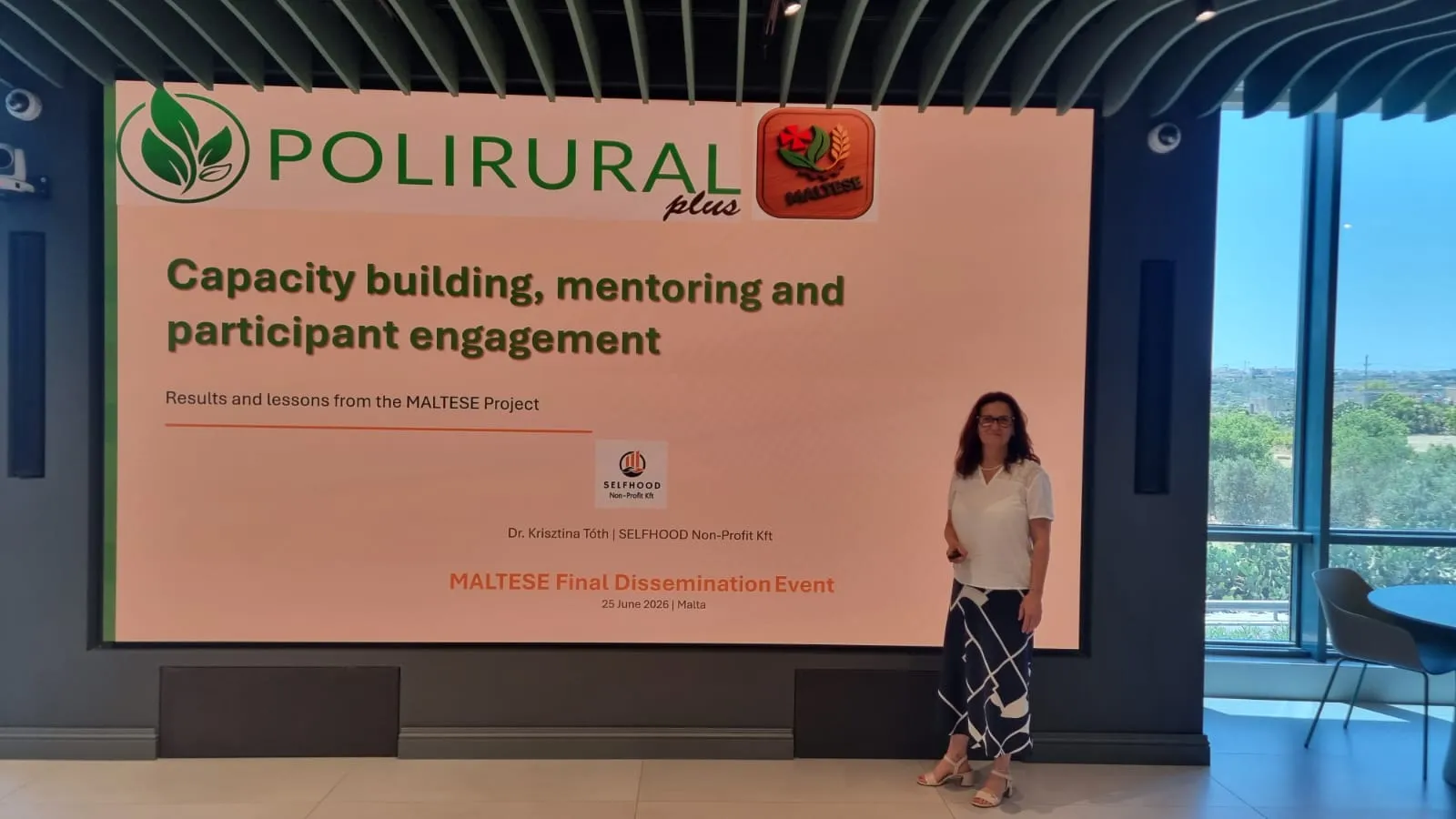
The event then shifted from the prototype to the people who had worked with it. Dr. Krisztina TOTH of SELFHOOD presented capacity-building, mentoring and engagement results. The Malta training combined demonstrations, community mapping, circular economy exercises, business model development and coaching, helping participants connect the tools with possible services, farm activities and enterprises.
PAMEA and SELFHOOD then presented lessons on circular agri-business, local market access and sustainability. The project had explored resource efficiency, SMART irrigation, short supply chains, reusable packaging, eco-labelling and viable business models. Sustainability, they stressed, must shape resource use, value creation and market access, rather than remain a label attached to a proposal.
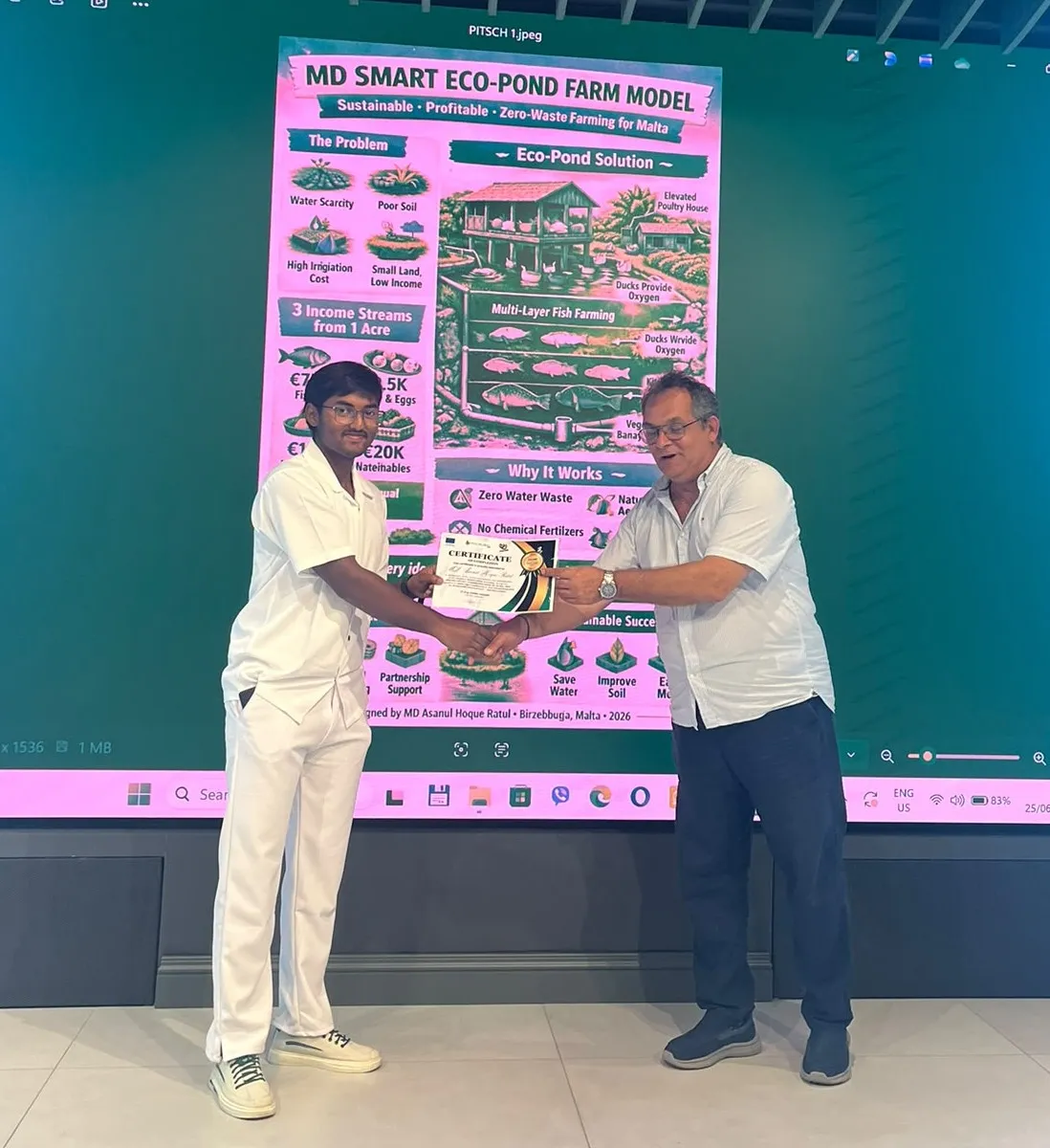
The participant showcase provided the clearest evidence that the training had generated more than attendance certificates. MD Asanul HOQUE RATUL presented the MD SMART ECO-POND FARM MODEL, while Dorian BUGEJA presented GROW BOX. Both concepts had emerged from the training and pitching process and were presented as practical examples of how participants could translate digital, circular and entrepreneurial learning into structured ideas. Justin CAMILLERI, the third selected pitching winner, was unable to attend because of illness and sent his apologies.
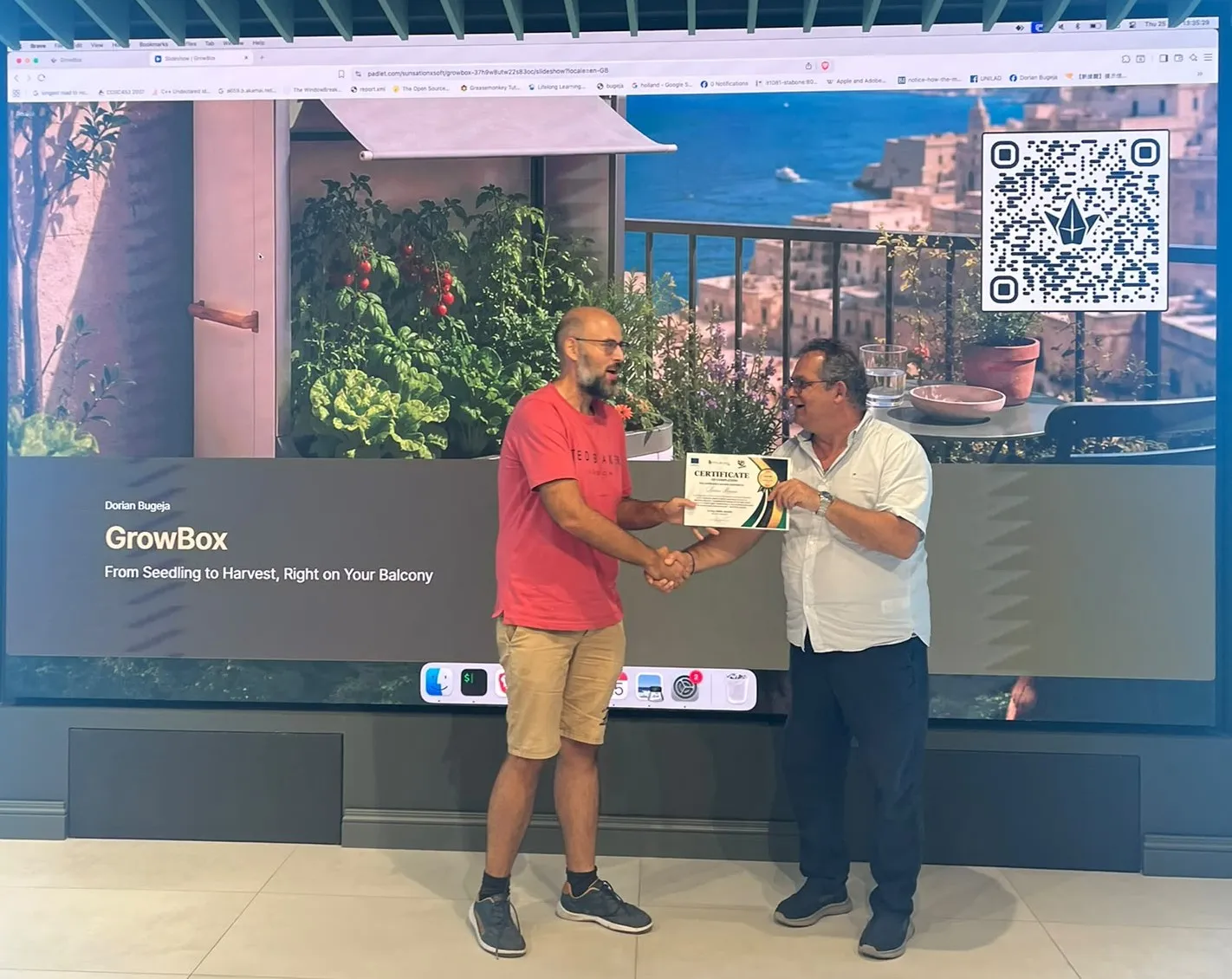
Certificates were then handed over to participants. This recognition mattered, although the more substantial closing activity was the stakeholder round table on what MALTESE leaves behind for rural Malta. Moderated by Dr. Amariei, the discussion moved away from project reporting and toward the harder question of adoption.
Participants highlighted the low interest of some farmers in new tools and approaches. The discussion linked this to insufficient incentives and gaps in skills and knowledge, rather than treating it as simple resistance to technology. A technically sound service may still be ignored when the benefit is unclear or the user lacks confidence to test it.
A second conclusion was that knowledge sharing must begin much earlier. Participants stressed the value of introducing agriculture, sustainability, entrepreneurship and digital literacy from a young age. Schools, training providers, public institutions and local organisations can help build confidence and improve how farming and rural enterprise are understood before career choices are fixed.
The round table therefore called for a more realistic model of rural innovation. Digital tools should be paired with incentives, practical guidance, trusted intermediaries and follow-up support. Farmers and rural entrepreneurs need locally relevant examples and a clear reason to invest their time. The final Q&A framed MALTESE as a foundation for further work, not a finished answer.
What the event showed: conclusions
Challenges, lessons and recommendations
The event confirmed that adoption is the central challenge. MALTESE reduced technical barriers and created practical learning opportunities, yet the round table showed that incentives, knowledge and confidence remain decisive.
Future initiatives should combine user-friendly tools with long-term mentoring, direct engagement through trusted local actors and visible benefits for farmers. Education should begin earlier, while adult training should remain practical and linked to real decisions rather than generic digital awareness.
Fit with PoliRuralPlus and data integration
MALTESE aligns with the PoliRuralPlus ecosystem by adapting JackDaw, Map Whiteboard and the E-Market to a Maltese setting. Its value comes from combining these tools with locally relevant data, including soil classifications, moisture readings, protected areas and funding information. The result is a modular workflow connecting territorial knowledge, collaborative planning and market activity. Further work should maintain clear data provenance, regular updates and appropriate privacy controls.
Replication and scalability
The approach has replication potential because each component can be localised separately. Other small islands, peri-urban farming areas or rural regions could replace Maltese datasets, languages and market content while retaining the core architecture. A sensible replication route would start with one high-value service, test it with local users, and add mapping, sensor or e-commerce functions only when institutional capacity and demand are established.
New European Bauhaus principles
The project’s New European Bauhaus alignment was visible in practical terms. Sustainability was addressed through SMART irrigation, resource efficiency, circular agri-business and shorter supply chains. Inclusion was supported through training, mentoring, mobile access and engagement with farmers, young people and entrepreneurs. Aesthetics appeared through clear map-based interfaces, visual collaboration and a more approachable user experience. The event also exposed the work still required: inclusion is incomplete while farmers lack incentives or confidence to participate.
From project closure to a longer pathway
The Final Dissemination Event consolidated MALTESE’s technical, educational and entrepreneurial results in one place. It also prevented the project from ending with an overly comfortable conclusion. The prototype is stronger, participants developed concrete ideas, and the consortium demonstrated a coherent link with PoliRuralPlus. Long-term value will depend on continued maintenance, local ownership, incentives, education and repeated engagement with rural users.
MALTESE leaves behind more than a set of tools. It leaves a tested pathway: connect local data with accessible digital services, place those services inside training and mentoring, and use stakeholder dialogue to identify the barriers that software cannot solve. That pathway is relevant to Malta and to other European regions trying to make rural innovation practical, inclusive and durable.
Key takeaways
- The Final Dissemination Event connected project results, prototype demonstrations, participant pitches and a candid stakeholder round table.
- Thomas Abela of MDIA, PAMEA, AcrossLimits, SEMABLU and SELFHOOD presented complementary institutional, technical and capacity-building perspectives.
- MD SMART ECO-POND FARM MODEL and GROW BOX showed how training participants translated project learning into practical business concepts.
- Low farmer interest was linked to limited incentives and gaps in skills and knowledge, not simply resistance to technology.
- Participants recommended beginning agricultural, sustainability and digital knowledge sharing from an early age.
- Replication is possible through modular tools and local data, but sustained adoption requires maintenance, incentives and trusted support.
References and related information
Official event announcement: Join the MALTESE Final Dissemination Event
Project website: MALTESE project
MALTESE Consortium, Final Dissemination Event Agenda, 25 June 2026.
Funding acknowledgement
The project PoliRuralPlus has received funding from the European Union’s Horizon Europe research and innovation programme under grant agreement No 101136910.
Disclaimer
Views and opinions expressed are, however, those of the author or authors only and do not necessarily reflect those of the European Union or the European Research Executive Agency. Neither the European Union nor the granting authority can be held responsible for them.
Existing Comments