Latest news
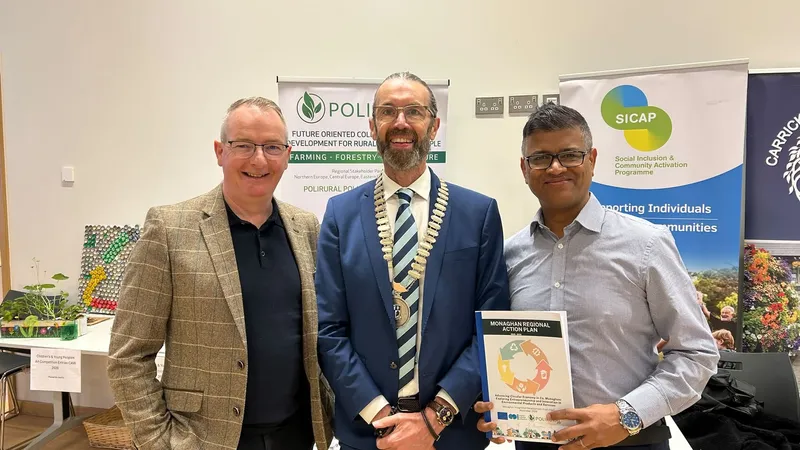
Irish Pilot Advances Community-Led Circular Economy Action in Monaghan
The Irish pilot of PoliRuralPlus was highlighted at the Circular Economy in Action Conference 2026: Rethink, Repair, Reuse, hosted by Monaghan County Council at the Monaghan Peace Campus on 17 Octobe
Read more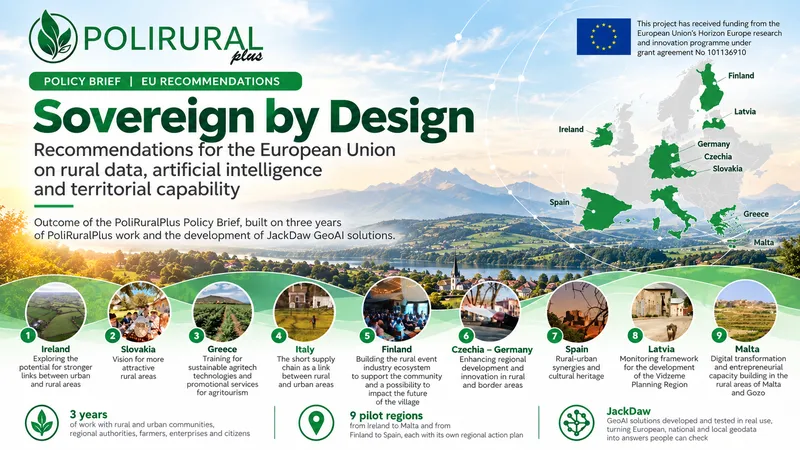
Sovereign by Design: PoliRuralPlus Policy Recommendations for Europe's Rural Digital Future
How can Europe ensure that artificial intelligence and digital technologies truly serve rural communities – not only during research projects, but long after they have ended?This question is at the h
Read more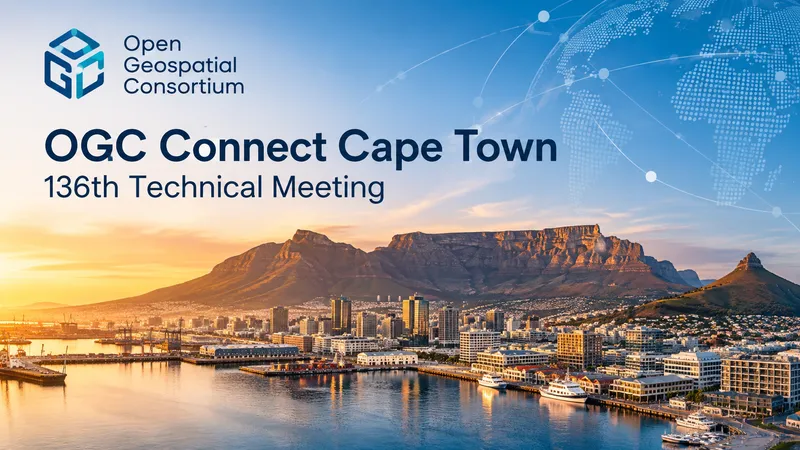
PoliRuralPlus Brings JackDaw GeoAI to OGC Connect Cape Town
The PoliRuralPlus project was featured at OGC Connect Cape Town, the Open Geospatial Consortium’s 136th Technical Meeting in South Africa, held on 12–15 October 2026. During the Agriculture Domain Wo
Read moreLatest blog articles
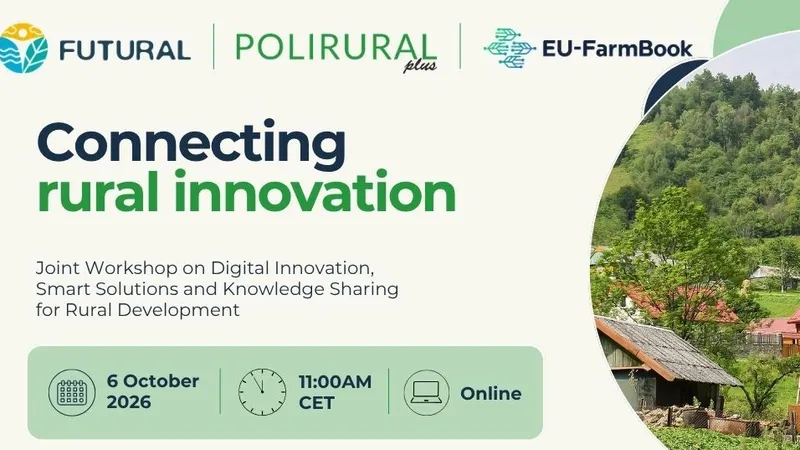
Upcoming Workshop: FUTURAL × PoliRuralPlus × EU-FarmBook
Fostering innovation and strengthening collaboration are essential for supporting resilient, smart and sustainable rural communities. In this context, FUTURAL, PoliRuralPlus and EU-FarmBook are joini
Read more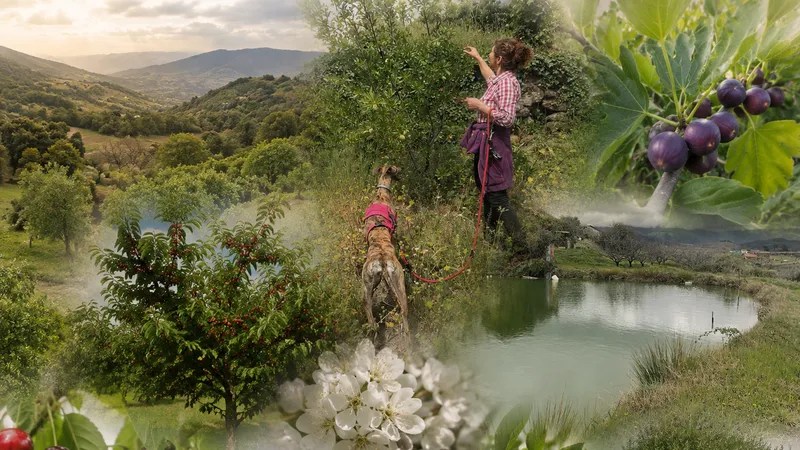
From farm to visitor: how we taught JackDaw to speak for our estate
Since this spring, visitors to Aires de la Vera carry something new in their pocket: direct access to JackDaw, the GeoAI agent of PoliRuralPlus, from inside the estate's app. They can ask it contextu
Read more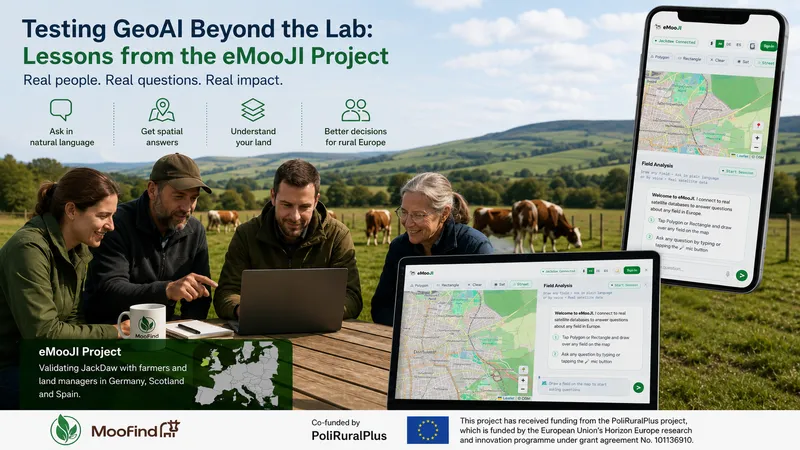
Testing GeoAI Beyond the Lab: Lessons from the eMooJI Project
Artificial intelligence for geospatial analysis is advancing rapidly, but its value ultimately depends on whether real people can use it to solve real problems. During the six-month eMooJI project, f
Read morePoliRuralPlus Main aim
PoliRuralPlus extends and enriches the achievements of its predecessor, the PoliRural, by delving deeper into the complexities of rural and urban interconnectivity. It deploys a sophisticated suite of digital tools, including Artificial Intelligence, Geographic Information Systems, Internet of Things, and advanced data analytics. The project's core mission is to tackle prevalent issues such as administrative fragmentation, inequality, and inefficiencies
in public service coordination, fostering an environment of enhanced cooperation and equal opportunities across rural and urban divides. Central to PoliRuralPlus are 9 pilot projects that serve as proving grounds for an EU-wide integrated approach to territorial planning and action foresight. PoliRuralPlus ambitiously expands its scope to include the urban dimension, thus embracing a broader perspective on development.
PoliRuralPlus Objectives
To develop and implement a foresight-based framework for interregional cooperation and coordination, aimed at overcoming policy barriers and improving governance arrangements to foster integrated and smart rural-urban development strategies
To develop and implement integrated strategies and action plans that enhance the availability of business and innovation opportunities in rural areas, while promoting a more proximate, circular, and green economy and revitalising rural places through better connectivity, improved valorization of cultural and natural heritage, and stronger innovation ecosystems.
To enhance mutual access to services and social connectivity between rural and urban areas, as well as build resilience and capacity for innovation through the implementation of regional action plans and pilot initiatives.

Contribute to the implementation of the European Green Deal, with a specific focus on the farm-to-fork and biodiversity strategies, the organic action plan, the common agricultural policy (CAP), the long-term vision for the EU’s rural areas, the flagship initiative “Research and innovation for rural communities,” and the EU territorial agenda for 2030.
To enhance cross-disciplinary collaboration and leverage the full potential of European Research Infrastructures, EOSC, EU Data spaces, INSPIRE, Copernicus, DIAS, Eurostat, FAO, and other relevant data sources for integrated rural-urban development.
To facilitate mission-oriented experimentation and innovation by leveraging data-driven decision-making, collaborative analysis, and system dynamics to advance the development of a well-being economy based on proximity, circularity, green economy/society, services, culture, landscape and heritage, and mobility.

To create synergies with the New European Bauhaus (NEB) and other EU-funded projects, facilitating ideas flows from urban to rural settings and vice versa.