
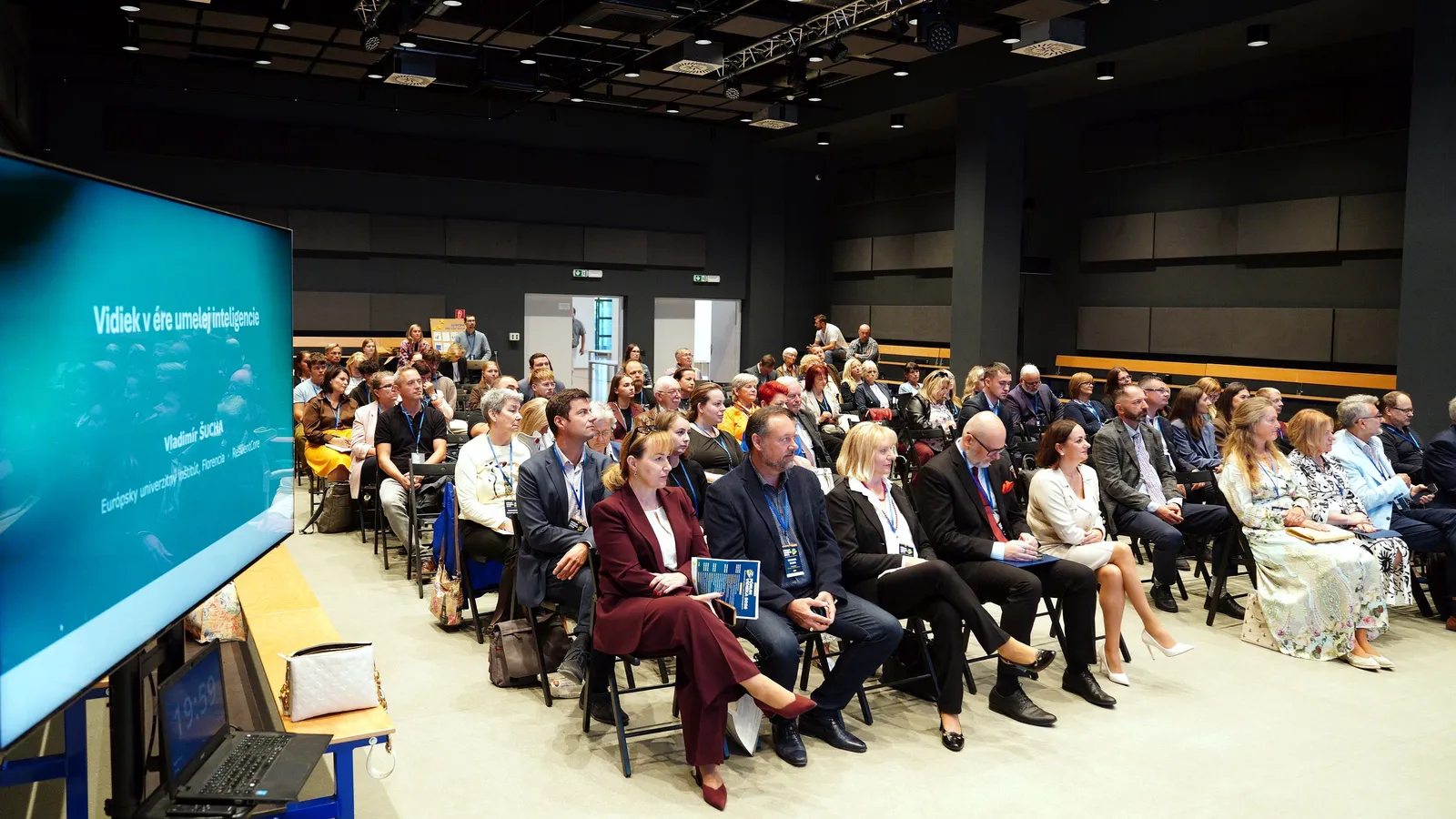

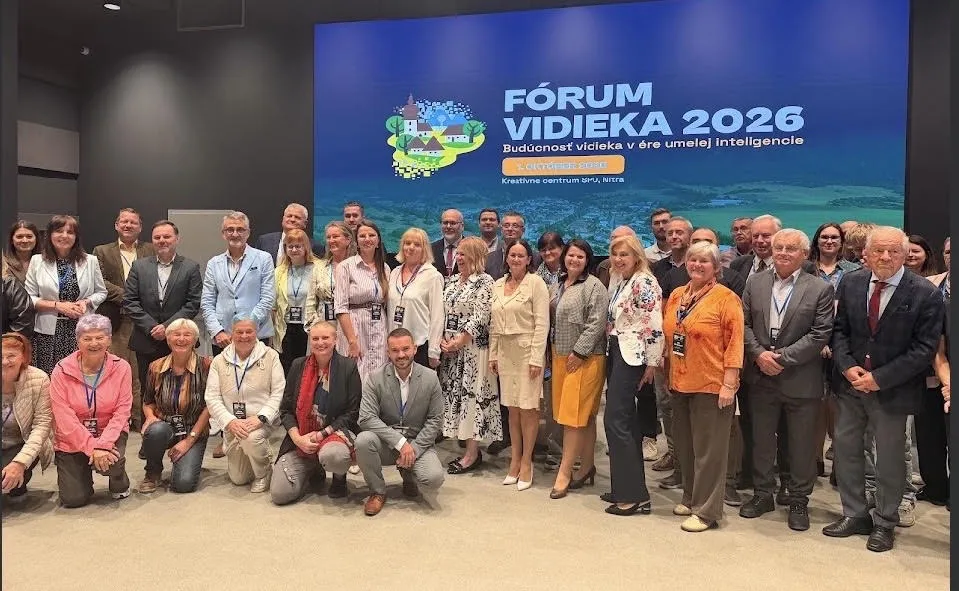
Nitra, Slovakia, 1 October 2026 - How will artificial intelligence reshape rural life, agriculture, public services and local communities? And how can rural areas benefit from AI while preserving human skills, trust and community life?
These questions were at the centre of the XIV Slovak Rural Forum, held on 1 October 2026 at the Creative Centre of the Slovak University of Agriculture in Nitra under the theme “The Future of Rural Areas in the Age of Artificial Intelligence: Opportunities, Risks and Recommendations for Practice and Policy.”
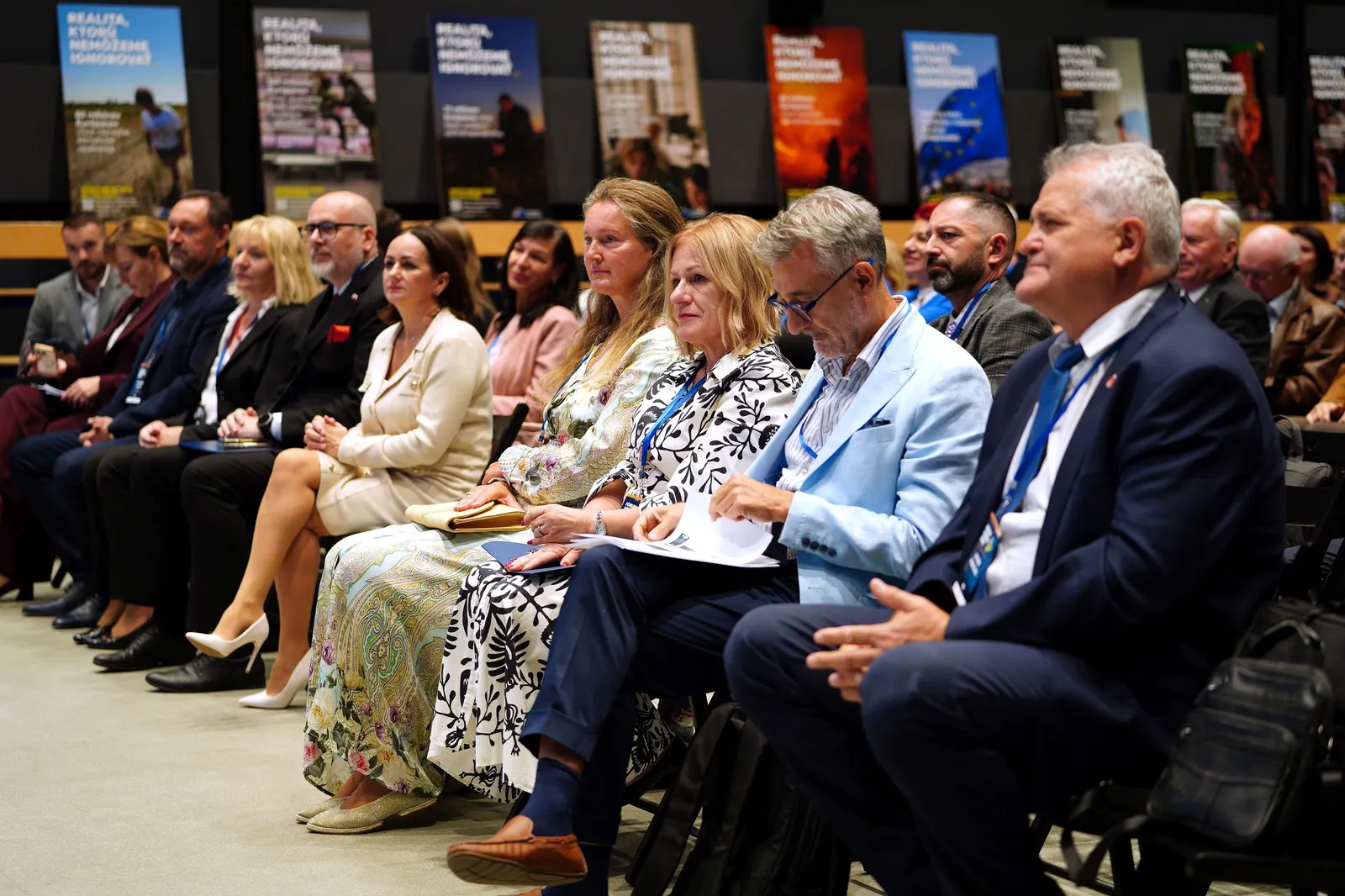
The event brought together around 100 participants representing ministries, municipalities, public administration, agriculture, local action groups, business, research and education, civil society and regional development organisations. The Forum provided a space for an open dialogue on how technological transformation can contribute to more resilient, innovative and inclusive rural areas.
AI as both an opportunity and a challenge
The discussions highlighted the considerable potential of AI in rural development. Artificial intelligence can support precision agriculture, automation, advisory services, entrepreneurship, education and more efficient public services. For farmers, AI and digital technologies can improve resource efficiency, climate adaptation and access to knowledge.
At the same time, participants stressed that technological progress should not come at the expense of human capabilities. Over-reliance on AI may weaken practical skills, independent judgement and the transfer of knowledge between generations. AI literacy therefore needs to go beyond simply learning how to use digital tools. Rural citizens need to be able to question, verify and critically assess AI-generated information and retain the ability to perform essential tasks without technological assistance.
This human dimension was particularly relevant in the discussion on rural communities. Trust, close social relationships, intergenerational cooperation and community life were identified as important sources of resilience in a period of rapid technological and social change.
Rural communities as a source of resilience
One of the key messages of the Forum was that technology alone cannot make rural areas resilient.
Strong communities can provide an important response to growing social isolation, digital dependency and declining face-to-face interaction. Rural areas retain valuable forms of social capital and opportunities for interaction across generations. Contact with nature, local production, community activities and shared responsibility can complement technological innovation and contribute to quality of life.
The discussion also highlighted the importance of ensuring that vulnerable groups are not left behind. Digital transformation should therefore be accompanied by human support, accessible services and community-based assistance, particularly for older people and people with limited digital skills.
Data, digital sovereignty and smart rural development
Another major topic was digital sovereignty. As farms, municipalities and public institutions increasingly rely on digital systems, questions arise about who owns and manages the data, where data are stored, how they are shared and who can benefit from their economic value.
The Forum therefore called for transparent data governance, interoperability, privacy protection and stronger cybersecurity. Human oversight should remain an essential part of AI-supported decision-making, particularly where decisions affect citizens and public services.
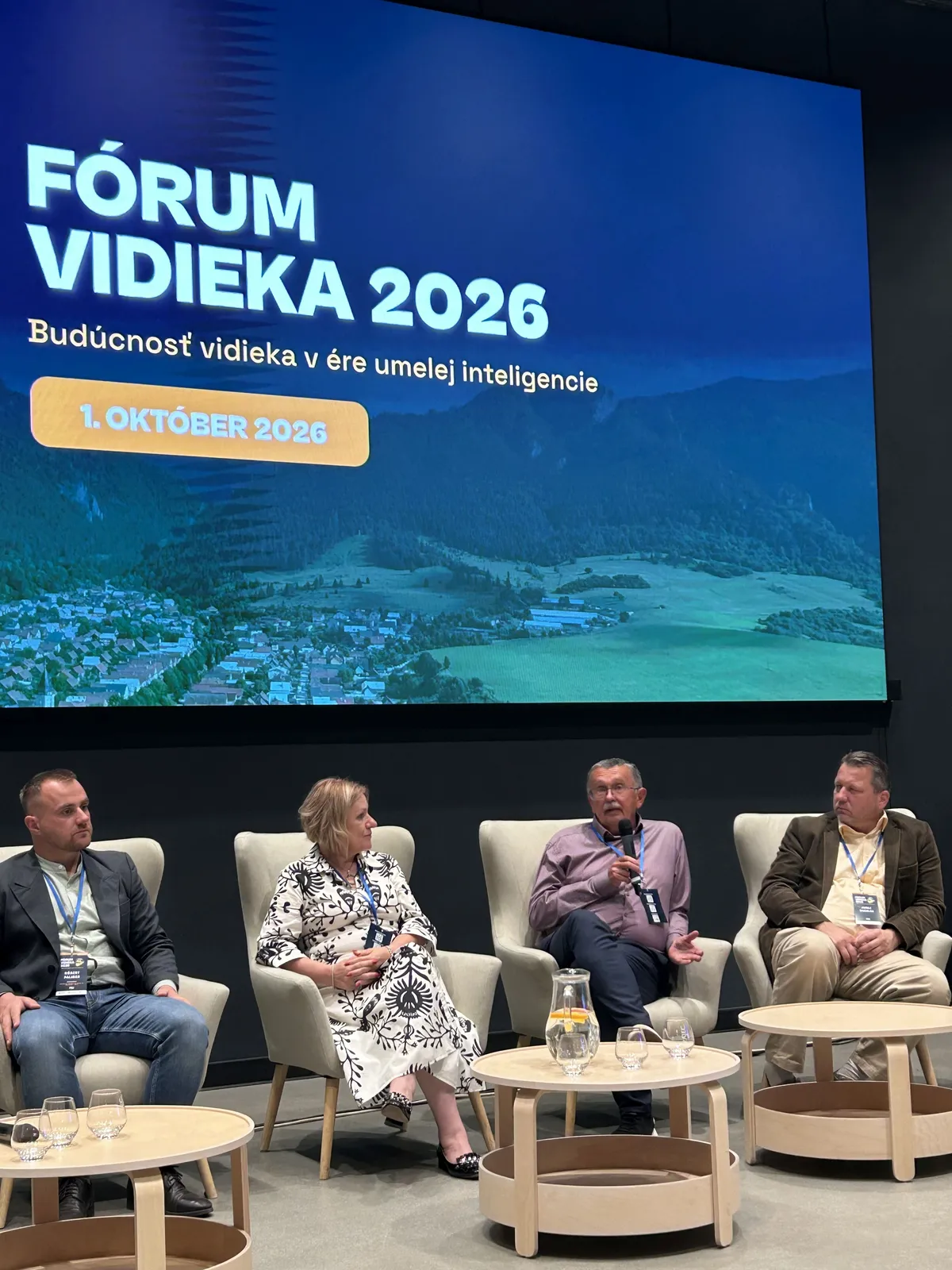
These issues are closely connected with the work of PoliRuralPlus, which explores how AI, geospatial data and digital tools can support rural decision-making. Karel Charvát of the Czech Centre for Science and Society, a key PoliRuralPlus expert on GeoAI and data-driven rural development, also contributed to the Forum. He took part in the afternoon Round Table, where participants continued the discussion on the opportunities and challenges of AI for rural areas.
His participation provided an important link between the Slovak rural policy discussion and the technological and data-driven solutions being developed within PoliRuralPlus. The project has previously explored approaches combining large language models with geospatial and agricultural data to provide more context-aware support for farmers, policymakers and rural stakeholders.
From discussion to practical recommendations
The Forum organised four thematic working groups focusing on:
- AI, people, education and intergenerational links
- AI, agriculture and food systems
- Smart municipalities and future public services
- The future of rural policies and financing
Their discussions resulted in a set of recommendations addressing responsible AI use, digital education, administrative simplification, integrated public services, datňňa governance, agricultural innovation, inter-municipal cooperation and rural proofing.
Among the priorities identified were:
- ensuring human oversight and accountability when AI is used in public decision-making;
- developing practical AI and digital skills across generations;
- using AI to reduce administrative burdens for municipalities, farmers and businesses;
- ensuring that digitalisation improves rather than restricts access to public services;
- strengthening data sovereignty, cybersecurity and transparent data governance;
- combining agricultural digitalisation with the preservation of practical farming knowledge;
- supporting cooperation between municipalities and the development of functional micro-regions;
- introducing rural proofing so that the impacts of policies on rural areas are systematically considered;
- creating simpler and more accessible funding mechanisms for rural actors.
The recommendations are intended to contribute to the preparation of the 2028–2034 programming period and to the longer-term development vision for Slovak rural areas towards 2040.
Connecting digital, green and social transitions
The Forum underlined that the digital transition cannot be separated from the environmental and social dimensions of rural development. Future rural policies need to connect technological innovation with climate resilience, sustainable food production, accessible public services, local economies and strong communities.
This approach is also closely aligned with the broader objectives of PoliRuralPlus: using innovation, data and participatory approaches to strengthen rural–urban linkages and support more sustainable and resilient territorial development.
The final message of the Forum was clear:
"Artificial intelligence will not determine the future of rural areas on its own. People, communities and the values they choose to support will shape that future. Technology should serve people, communities and the land – not replace them".



Existující komentáře