Six PoliRuralPlus innovations have been approved for listing on the European Commission’s Innovation Radar, highlighting the project’s contribution to digital, spatial and policy-oriented innovation for rural-urban development.
This recognition marks an important milestone for PoliRuralPlus and its partners. It confirms the relevance of the project’s work in supporting sustainable, balanced, equitable, place-based and inclusive development of rural-urban communities through advanced digital tools, spatial intelligence, stakeholder engagement and Regional Action Plans.
The Innovation Radar is a European Commission initiative that identifies high-potential innovations and innovators emerging from EU-funded research and innovation projects. For PoliRuralPlus, inclusion in the Innovation Radar increases the visibility of project results and supports their future uptake by regions, policymakers, practitioners, public authorities, businesses and innovation ecosystems.
Six recognised PoliRuralPlus innovations
The six recognised innovations demonstrate the diversity and practical value of the PoliRuralPlus innovation portfolio. Together, they address key needs in rural-urban development: better use of knowledge, stronger data-driven planning, spatially informed decision-making, participatory governance, circular economy business models and AI-supported public administration.
1. AI Advisor: Multilingual Knowledge Space for Regional Policy
The AI Advisor supports regional policy work by creating a multilingual knowledge space for decision-makers, analysts and stakeholders. It helps users access, interpret and apply project knowledge across different languages, regions and policy contexts.
Its value lies in making complex rural-urban knowledge easier to search, connect and use. For regional policy teams, this can support better-informed decision-making, stronger evidence use and improved access to knowledge generated across PoliRuralPlus pilots.
Innovation owner:
The National Microelectronics Applications Centre Ltd, Ireland
Relevant SDGs:
SDG 2 Zero Hunger; SDG 6 Clean Water and Sanitation; SDG 12 Responsible Consumption and Production; SDG 15 Life on Land
2. DASHBOARD: AI-Powered Services for Rural-Urban Development
The DASHBOARD innovation focuses on AI-powered services for rural-urban development. It helps translate data into insights that can be used by regional actors, planners and policymakers.
This innovation supports the visualisation of rural-urban trends, attractiveness factors, development opportunities and policy-relevant indicators. It contributes to the PoliRuralPlus ambition to use digital tools and data for informed decision-making, territorial analysis and policy formulation.
Innovation owners:
Asplan Viak AS, Norway
The National Microelectronics Applications Centre Ltd, Ireland
Relevant SDGs:
SDG 8 Decent Work and Economic Growth; SDG 12 Responsible Consumption and Production
3. Jackdaw: Spatially Enhanced Attractiveness Mapping Toolbox
Jackdaw is a spatially enhanced attractiveness mapping toolbox. It supports the analysis and visualisation of territorial attractiveness, helping regions understand where opportunities, assets, gaps and development potential are located.
This innovation is particularly relevant for rural-urban planning because attractiveness depends on many interconnected factors, including accessibility, services, environment, quality of life, land use, cultural assets and links between rural and urban communities. Jackdaw strengthens the evidence base for Regional Action Plans and supports place-based policy design.
Innovation owners:
Plan4All z.s., Czech Republic
Asplan Viak AS, Norway
České centrum pro vědu a společnost, Czech Republic
Relevant SDGs:
SDG 2 Zero Hunger; SDG 12 Responsible Consumption and Production; SDG 15 Life on Land
4. MAAT: Multi-Actor Approach Tool
The Multi-Actor Approach Tool — MAAT supports structured stakeholder engagement, co-creation and participatory decision-making. It helps organise and manage the involvement of regional actors, including public authorities, businesses, researchers, civil society organisations and local communities.
The multi-actor approach is central to PoliRuralPlus. It helps ensure that policies and Regional Action Plans are shaped not only from a top-down perspective, but also through the knowledge, needs and priorities of local and regional stakeholders.
Innovation owner:
Fundación Socialinnolabs, Spain
Relevant SDGs:
SDG 2 Zero Hunger; SDG 11 Sustainable Cities and Communities; SDG 12 Responsible Consumption and Production; SDG 13 Climate Action; SDG 15 Life on Land
5. Rural Circular Economy Funding Business Models
The Rural Circular Economy Funding Business Models innovation focuses on financing and business model development for circular economy activities in rural areas.
This innovation is important because many rural-urban solutions need viable funding pathways to move from concept to implementation. By supporting business models for circular economy initiatives, PoliRuralPlus helps regions identify practical routes for new services, partnerships and economic activities that can strengthen local resilience, reduce waste and create value across rural-urban systems.
Innovation owners:
Monaghan Integrated Development CLG, Ireland
Acrosslimits Ltd, Malta
Relevant SDGs:
SDG 8 Decent Work and Economic Growth; SDG 12 Responsible Consumption and Production; SDG 15 Life on Land
6. VULTURE: AI-Based Companion for Public Servants
VULTURE is an AI-based companion for public servants. It supports public-sector users in working with information, policy options and decision-making processes related to rural-urban development.
Public servants often need to navigate complex policy documents, stakeholder inputs, data sources and territorial challenges. VULTURE provides AI-supported assistance for policy analysis, planning and foresight, contributing to the PoliRuralPlus goal of improving the capacity of regional and local authorities to design better, evidence-based and future-oriented actions.
Innovation owners:
Crehan, Kusano & Associates, Belgium
Vidzemes Planning Regions, Latvia
Relevant SDGs:
SDG 8 Decent Work and Economic Growth
A European innovation footprint
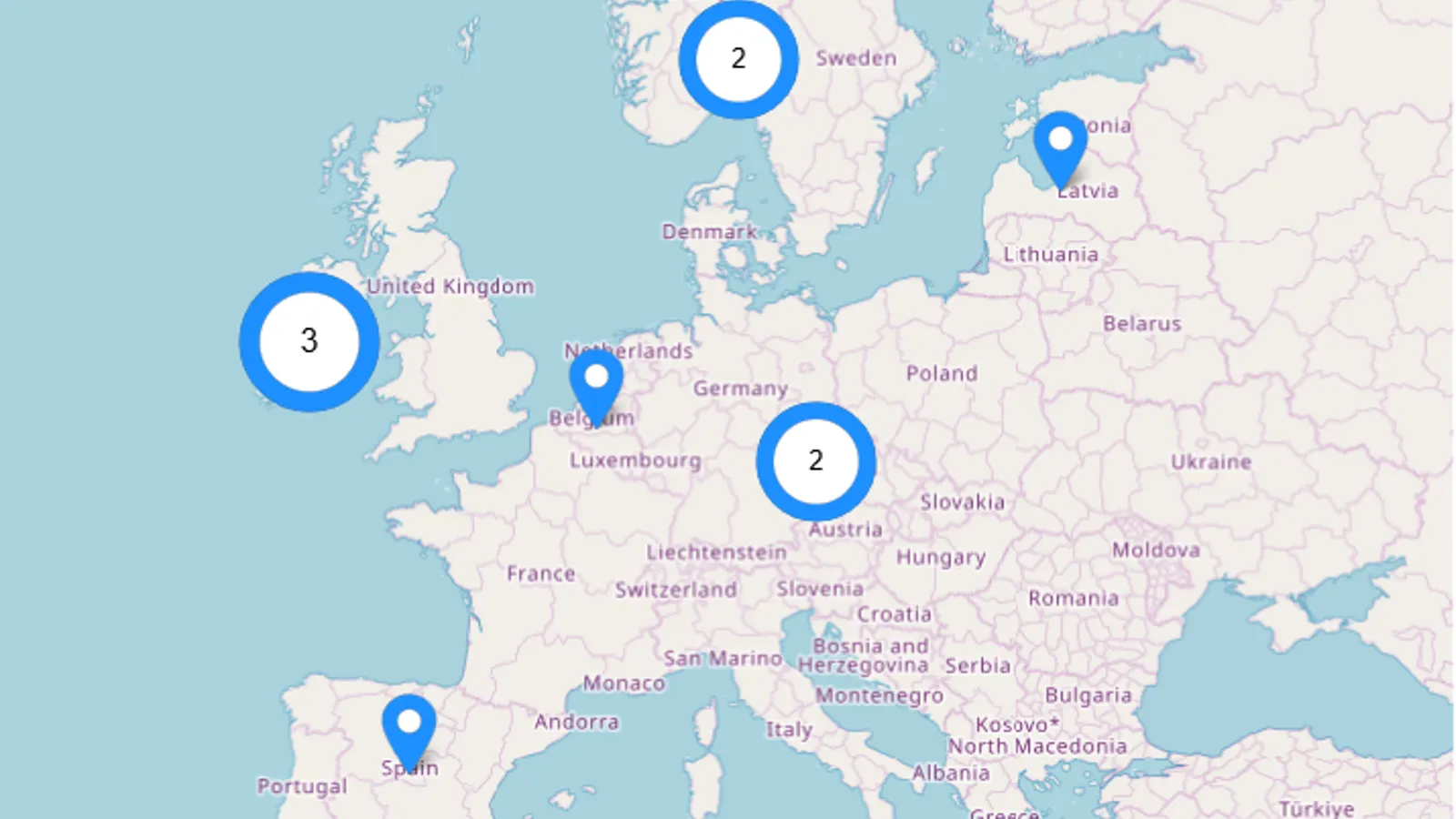
The Innovation Radar map shows that PoliRuralPlus innovation owners are distributed across Europe, including Ireland, Norway, Czech Republic, Spain, Malta, Belgium and Latvia. This geographical spread reflects the strength of the PoliRuralPlus consortium and its ability to connect technological expertise, regional knowledge and policy practice across different European contexts.
The six innovations also demonstrate the diversity of the project’s innovation portfolio. Some are focused on AI and knowledge support, others on spatial data and dashboards, while others address stakeholder engagement, business models and public-sector decision support. Together, they form a coherent set of tools and methods for improving rural-urban cooperation and regional attractiveness.
Why this matters
Innovation Radar recognition supports the project’s dissemination and exploitation pathway by increasing the visibility of results that can be tested, adopted, replicated or further developed by regions, public authorities, businesses and innovation ecosystems.
This is especially relevant as PoliRuralPlus continues its work with pilot regions and Regional Action Plans. The recognised innovations contribute to the project’s wider ambition to turn research, digital tools, data and stakeholder collaboration into practical support for rural and urban communities.
Links to selected PoliRuralPlus services related to these innovations are available on the project website: https://www.poliruralplus.eu/services/. Please note that not all Innovation Radar-listed results currently have a public service page, as some are still being developed, tested or prepared for wider exploitation.
Looking ahead
PoliRuralPlus will continue the development and validation of its services in pilot regions, assessing how they respond to real regional needs, support stakeholder engagement, and contribute to Regional Action Plan implementation.
User feedback will help improve usability, strengthen interoperability and identify opportunities for replication in other European regions.
More information about the European Commission Innovation Radar is available here: https://innovation-radar.ec.europa.eu/.



Existing Comments