
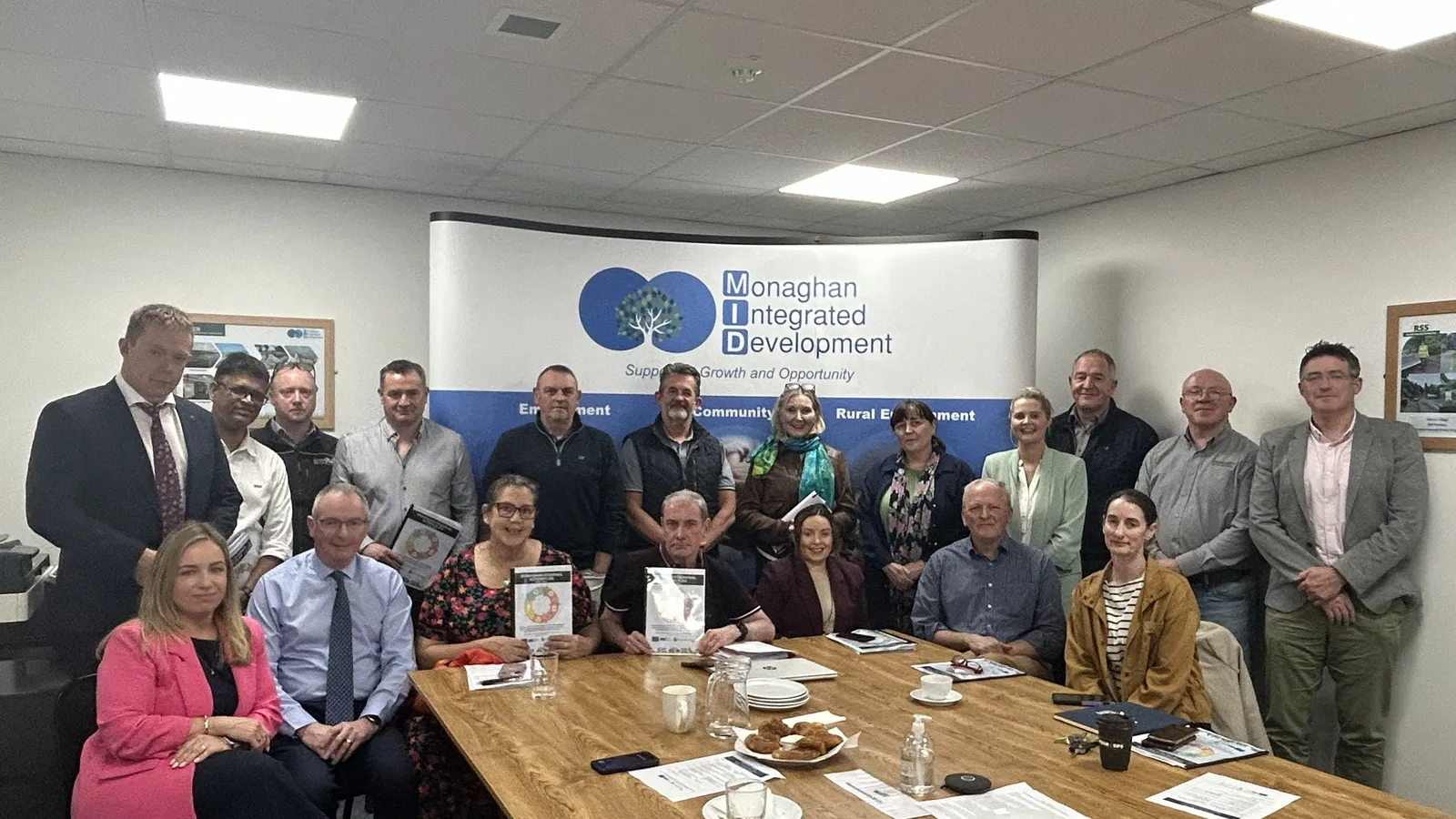
The Irish Pilot of the PoliRuralPlus project, led by Monaghan Integrated Development (MID), achieved a major milestone on 21 May 2026 by hosting its key Stakeholders Meeting at the MID Office in Castleblayney. Bringing together over 20 leaders from diverse sectors, the gathering marked the official regional launch of the Regional Action Plan: Advancing Circular Economy in Co. Monaghan (2026–2030), charting a transformative course for circular economy practices across the county.
Driving Innovation Through Data
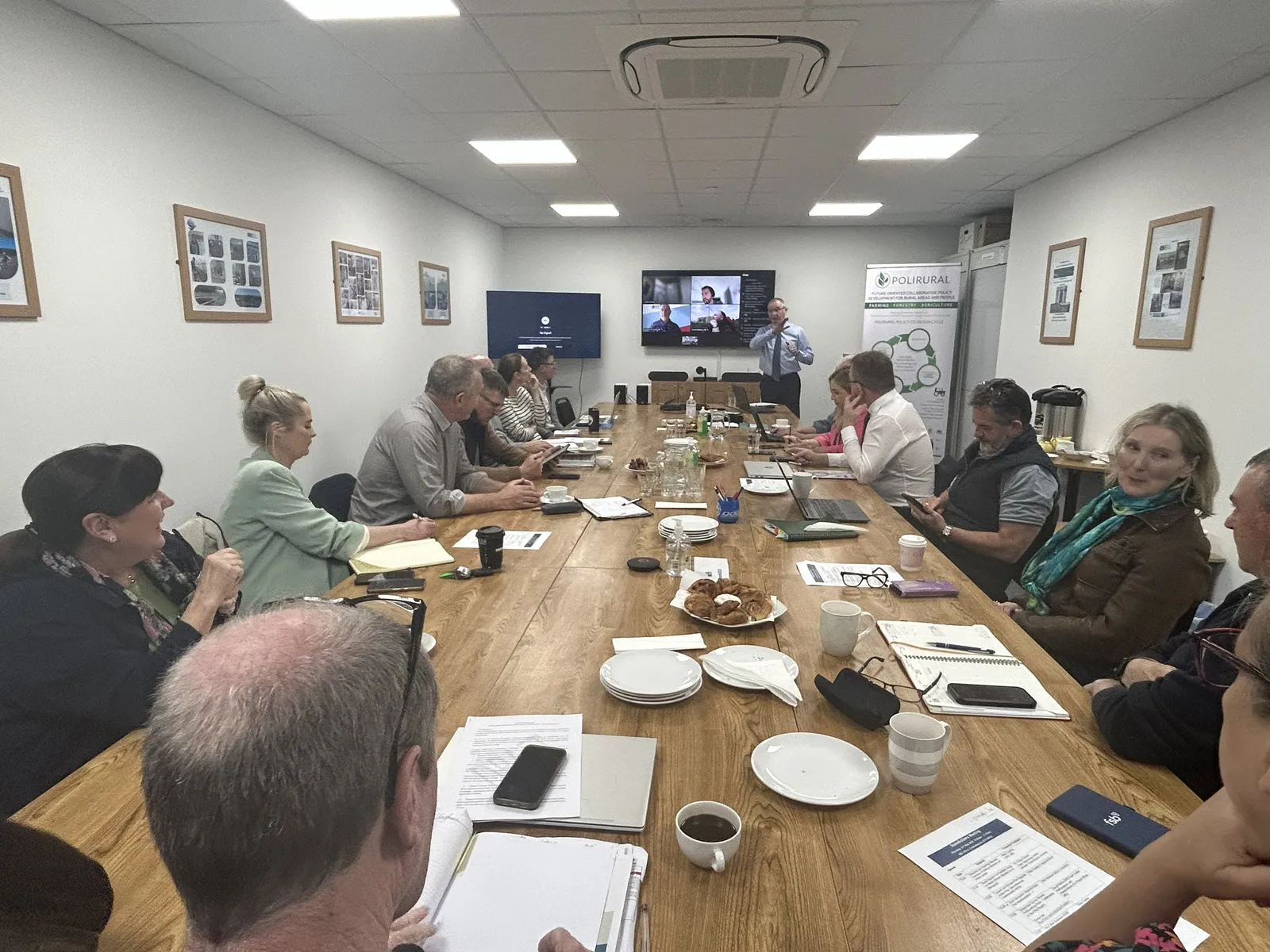
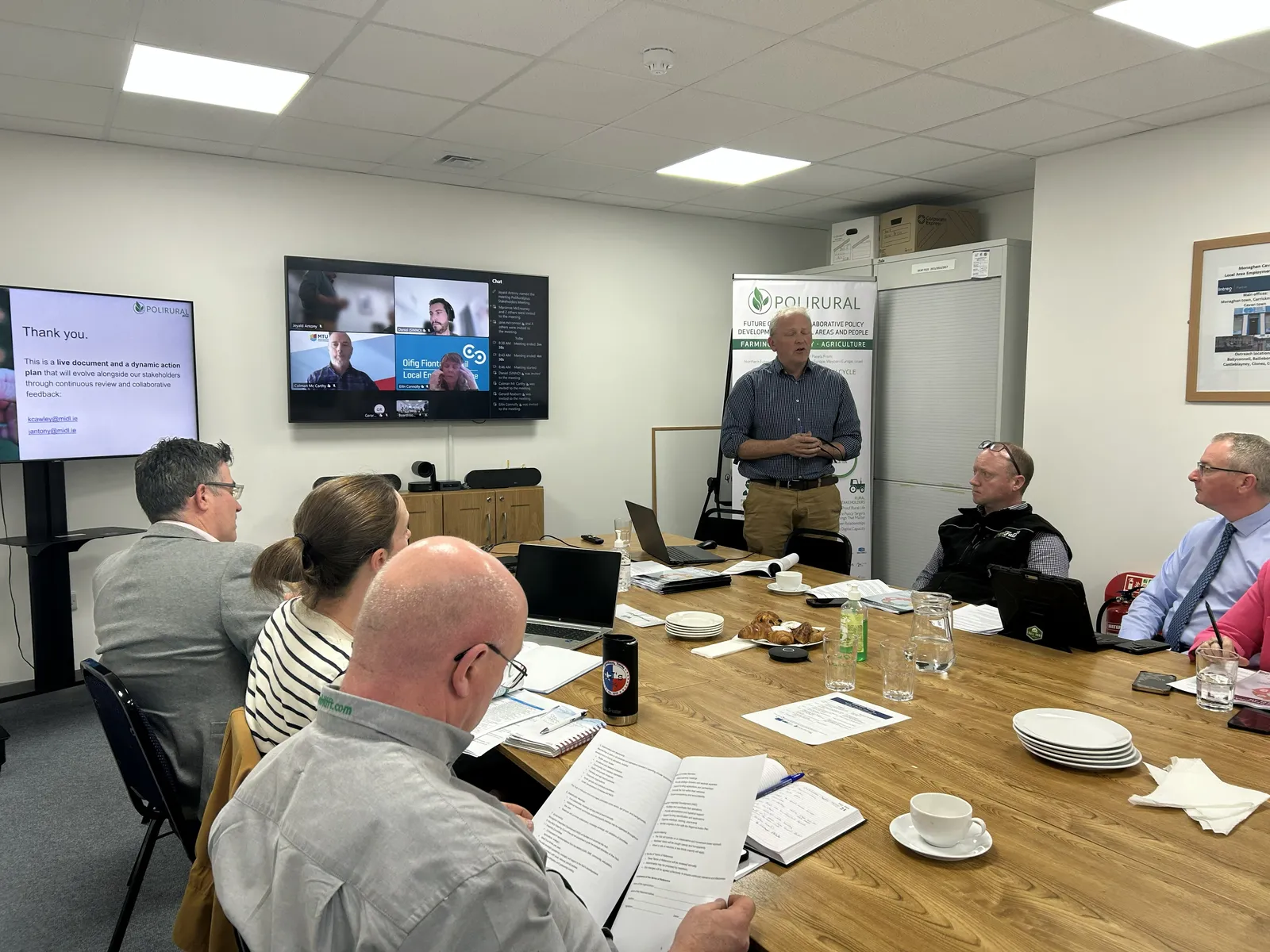
MID CEO Kilian Cawley opened the meeting with an executive overview of the project's 30-month journey. The Irish Pilot focuses on advancing the circular economy by exploring entrepreneurship and regional innovation opportunities in environmental products and services.
Kilian highlighted the project's innovative approach, which combines Geographic Information Systems (GIS), Artificial Intelligence (AI), and advanced analytics with local community knowledge to support more resilient, sustainable, and future-oriented rural economies.
Mapping Monaghan’s Waste Landscape
A significant highlight of the meeting was an expert presentation by Dr. Colum Gibson from the Clean Technology Centre at Munster Technological University (MTU), who presented findings from the newly completed Feasibility Study on Waste Stream Utilisation in County Monaghan.
The research identified the county’s three dominant waste streams:
- Construction & Demolition Waste
- Agriculture & Food Processing Waste
- Mixed Municipal Waste
As 75.9% of Monaghan’s workforce is employed within small and medium-sized enterprises (SMEs), the study focused on practical and scalable business opportunities suited to local conditions.
Dr. Gibson outlined several promising circular economy initiatives, including decentralised pallet recovery networks, material exchange platforms modelled on the repairmystuff.ie initiative, and regional surplus food redistribution hubs working in partnership with local charities and community organisations.
Official Launch of the Regional Action Plan (RAP) 2026–2030
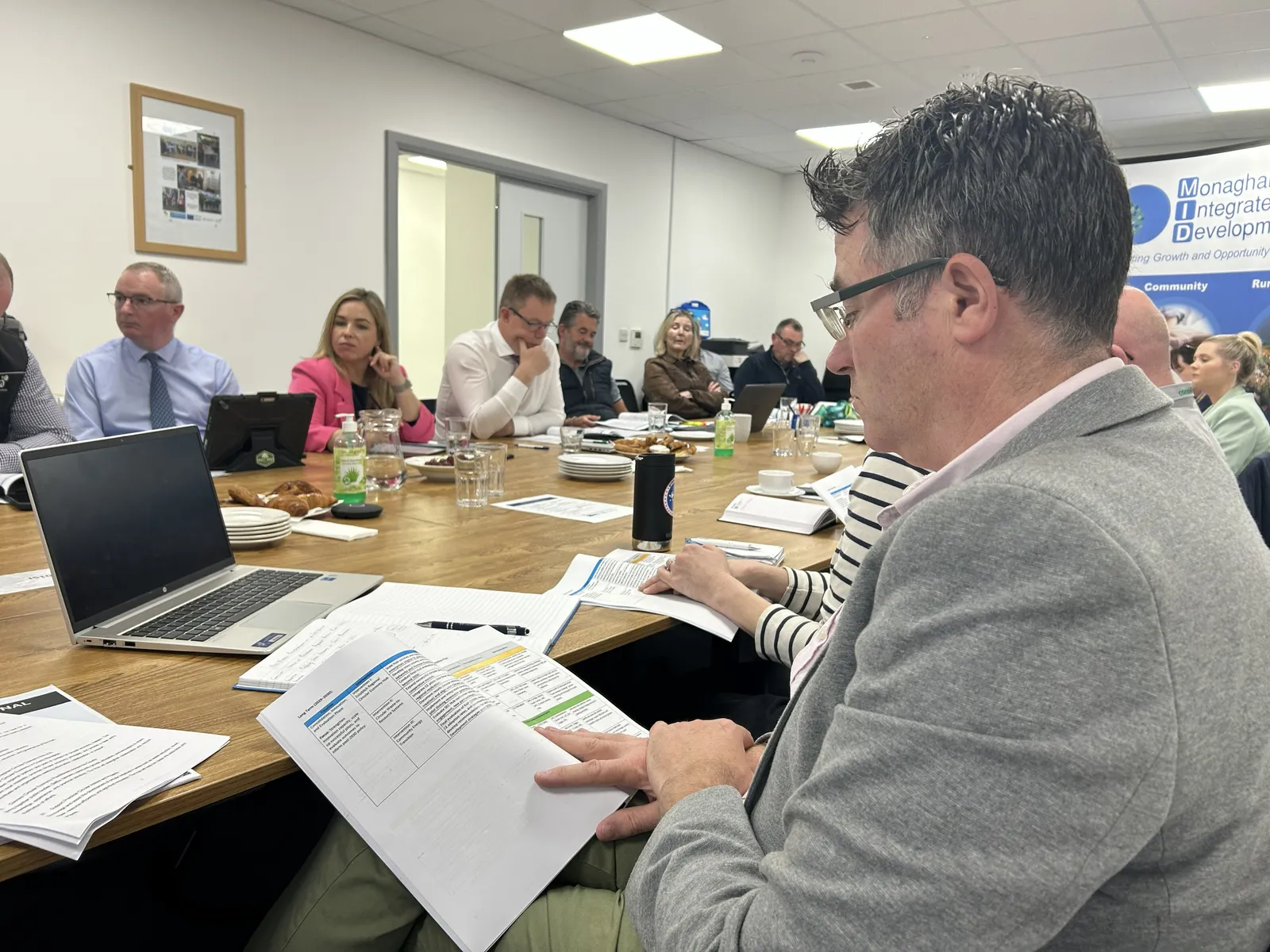
Following the official launch of the Regional Action Plan, Kilian presented the key interventions and activities that will guide implementation over the coming years.
The Plan is structured around three core interventions designed to strengthen regional resilience, economic development, and environmental sustainability:
- Regional Circular Economy Hub
Establishing a physical hub to support training, business incubation, repair initiatives, and green entrepreneurship.
2. Circular Waste-to-Resource Systems
Developing waste valorisation pilots and implementing comprehensive resource-mapping frameworks to identify new circular economy opportunities.
3. Community Energy Transition
Supporting citizen-led energy initiatives, upgrading community infrastructure, and exploring localised microgrid solutions.
Open Forum Strategy
Facilitated by Allen McAdam (MCA Consulting), the discussion focused on translating these interventions into practical actions. Participants explored opportunities for alignment with regional planning priorities, future funding streams, and collaborative project development. Stakeholders also expressed strong interest in pursuing joint actions and future funding applications to support implementation of the RAP.
Collaboration at its Core
The meeting concluded with an interactive pilot survey review led by WP5 Team Leader Daniel Molina, who joined virtually, alongside MID’s EU Project Officer, Jeyald Rasaratnam.
Stakeholders were guided through the Multi-Actor Approach, reinforcing the importance of collaboration among organisations including Monaghan County Council, Teagasc, Local Enterprise Offices, educational institutions, community groups, and business representatives.
The Monaghan stakeholder consortium will reconvene on 26 November 2026 for the project's final validation and wrap-up meeting.



Existing Comments