PoliRuralPlus is generating a wealth of knowledge across Europe – from digital tools and new approaches to rural development to regional cooperation models, pilot activities, Open Call projects and practical methods tested directly in rural areas.
But valuable knowledge only creates wider impact when it can be found, understood and reused.
This is why PoliRuralPlus has developed the Atlas of Practices – an interactive, map-based collection that brings project experiences and results together in one accessible place.
Why an Atlas of Practices?
Throughout PoliRuralPlus, partners, pilots and supported projects are developing and testing solutions in very different regional and thematic contexts. These results are documented across project activities, reports, websites, news articles and other materials. The Atlas provides a simple way to bring this knowledge together and make it visible beyond the individual activities that produced it.
Rather than being another project report, the Atlas is designed as a knowledge transfer and communication tool. Its purpose is to show what has been done, what has worked in practice, and what may inspire or be reused by other rural areas, communities, policymakers, researchers, businesses and innovators.
The collection includes tools and ICT solutions, stakeholder engagement approaches, regional and policy methods, educational activities, rural business initiatives, Open Call results and many other examples emerging from PoliRuralPlus.
126 Practices – Different Experiences, One Shared Resource
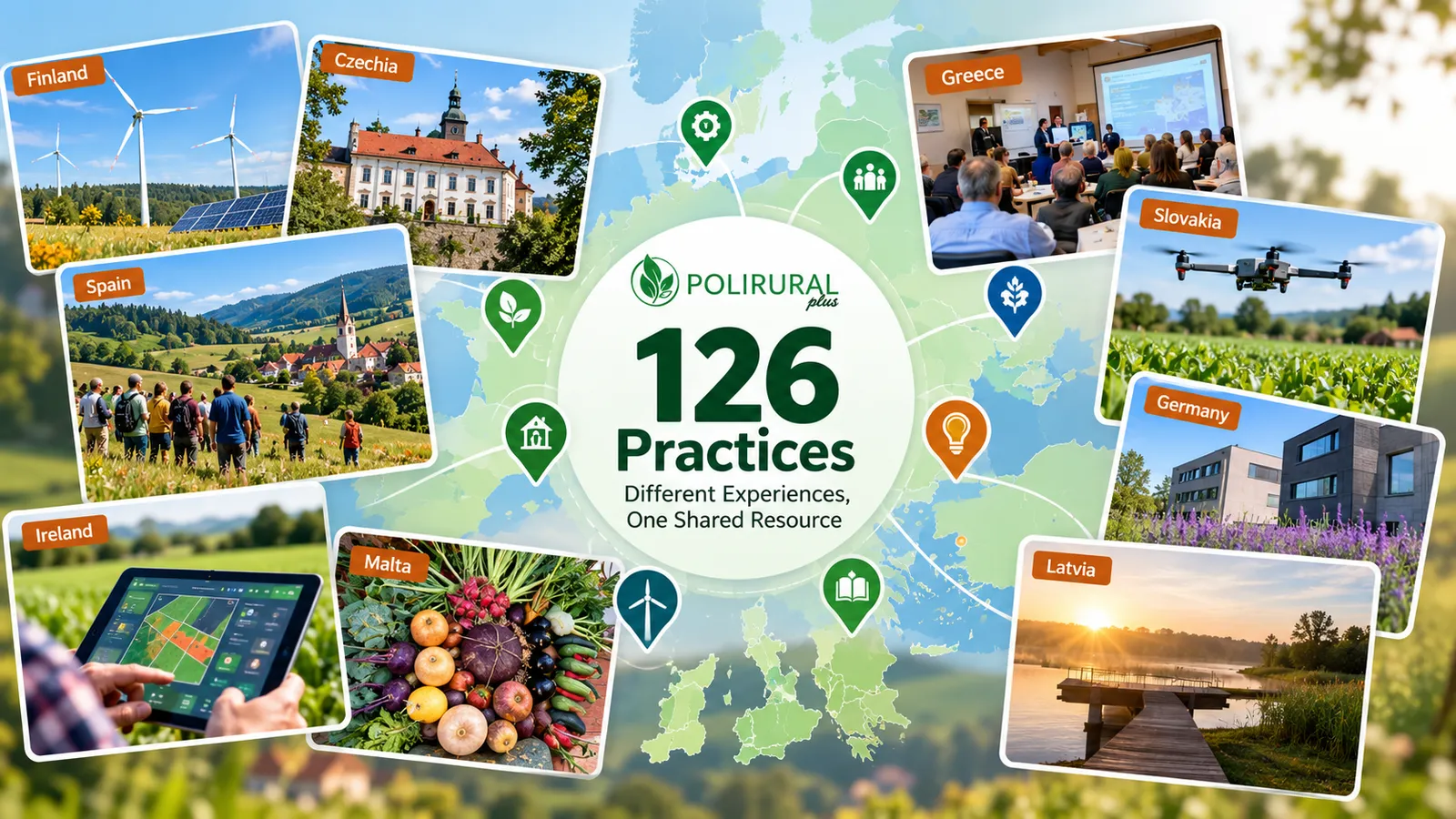
The Atlas currently brings together 126 Practices from across PoliRuralPlus.
The word “Practice” has been chosen deliberately. The Atlas is not intended to rank activities or claim that one solution represents the “best” approach. Instead, it presents experiences, methods, tools and solutions that are worth sharing and that may offer useful knowledge for others.
Practices can range from local activities to regional approaches and solutions with wider European relevance. Each Practice tells a different part of the PoliRuralPlus story. Some are closely connected to a particular municipality or pilot area. Others represent regional cooperation, planning or stakeholder engagement. Digital tools, methodologies and other solutions may have potential far beyond the location where they were originally developed or tested.
Together, they demonstrate the diversity of innovation taking place within the project.
Explore the Practices on the Map
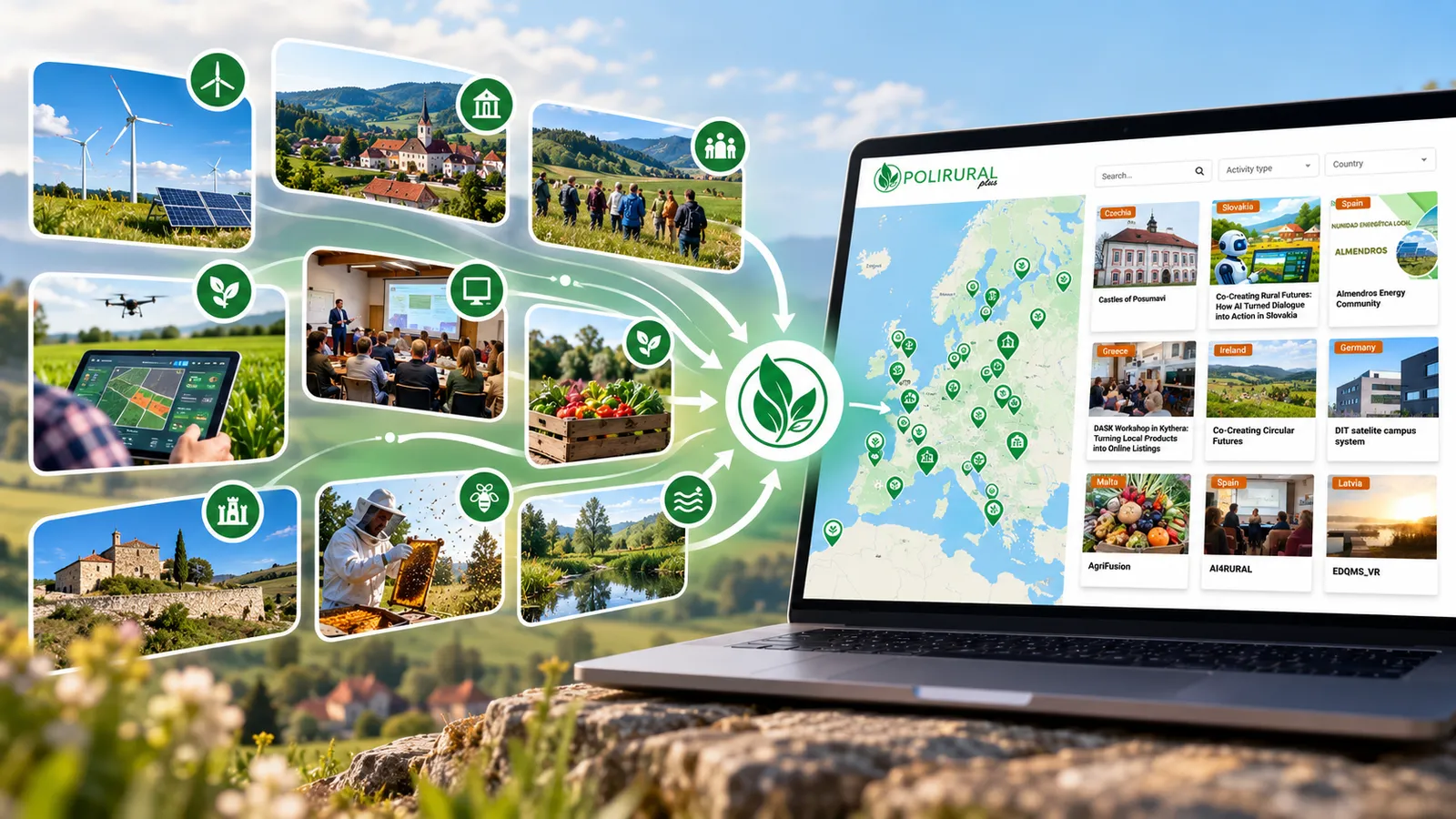
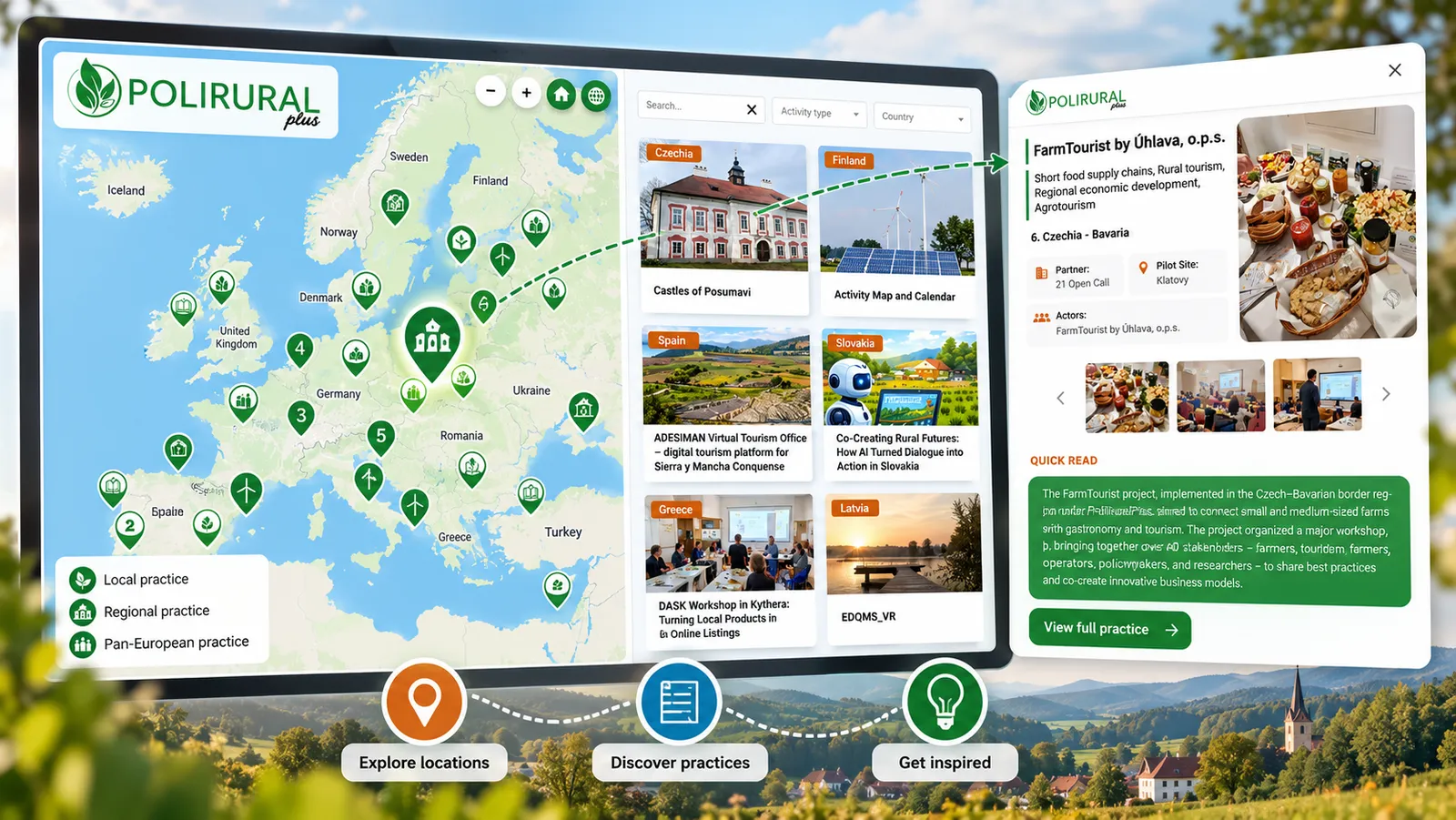
A central feature of the Atlas is its interactive map, which makes it easy to explore the Practices from different perspectives.
Each Practice is represented by a geographical point. Visitors can explore the map directly or use the available filters to narrow the selection, for example by country, region or category. This makes it possible to quickly find Practices connected to a particular territory or area of interest.
Clicking on a Practice opens further information about its purpose, context and scope, together with available images and links to additional resources.
Importantly, a point on the map does not necessarily mean that a Practice is relevant only to that location. Some Practices are locally anchored, while others represent regional or national approaches, or tools and methods with wider European relevance. The additional information provided in the Atlas helps users understand this broader context.
In this way, users can browse, filter and discover the collection according to their own interests – turning 126 individual project results into an accessible journey through PoliRuralPlus.
From Visibility to Replication
The Atlas is not only about showing what PoliRuralPlus has achieved. Its longer-term value lies in helping knowledge travel.
A method developed in one pilot may provide inspiration for another region. A digital solution tested in one context may be relevant elsewhere. A stakeholder engagement approach, regional initiative or Open Call project may offer ideas that others can adapt to their own needs.
This focus on sharing and replication also responds directly to the project’s objective of documenting replicable practices and emerging innovations and disseminating them systematically.
By bringing these experiences together, the Atlas helps transform individual project activities into a shared knowledge resource for rural innovation.
Discover, Learn and Get Inspired
With 126 Practices already collected, the PoliRuralPlus Atlas offers a broad picture of the ideas, activities, tools and approaches emerging from the project.
We invite rural communities, policymakers, researchers, innovators, businesses and everyone interested in the future of rural areas to explore the map, discover the Practices and follow the examples that are most relevant to them.
Discover the Practices. Follow their stories. Find ideas that can travel beyond their place of origin.
Explore the PoliRuralPlus Atlas of Practices


Existing Comments