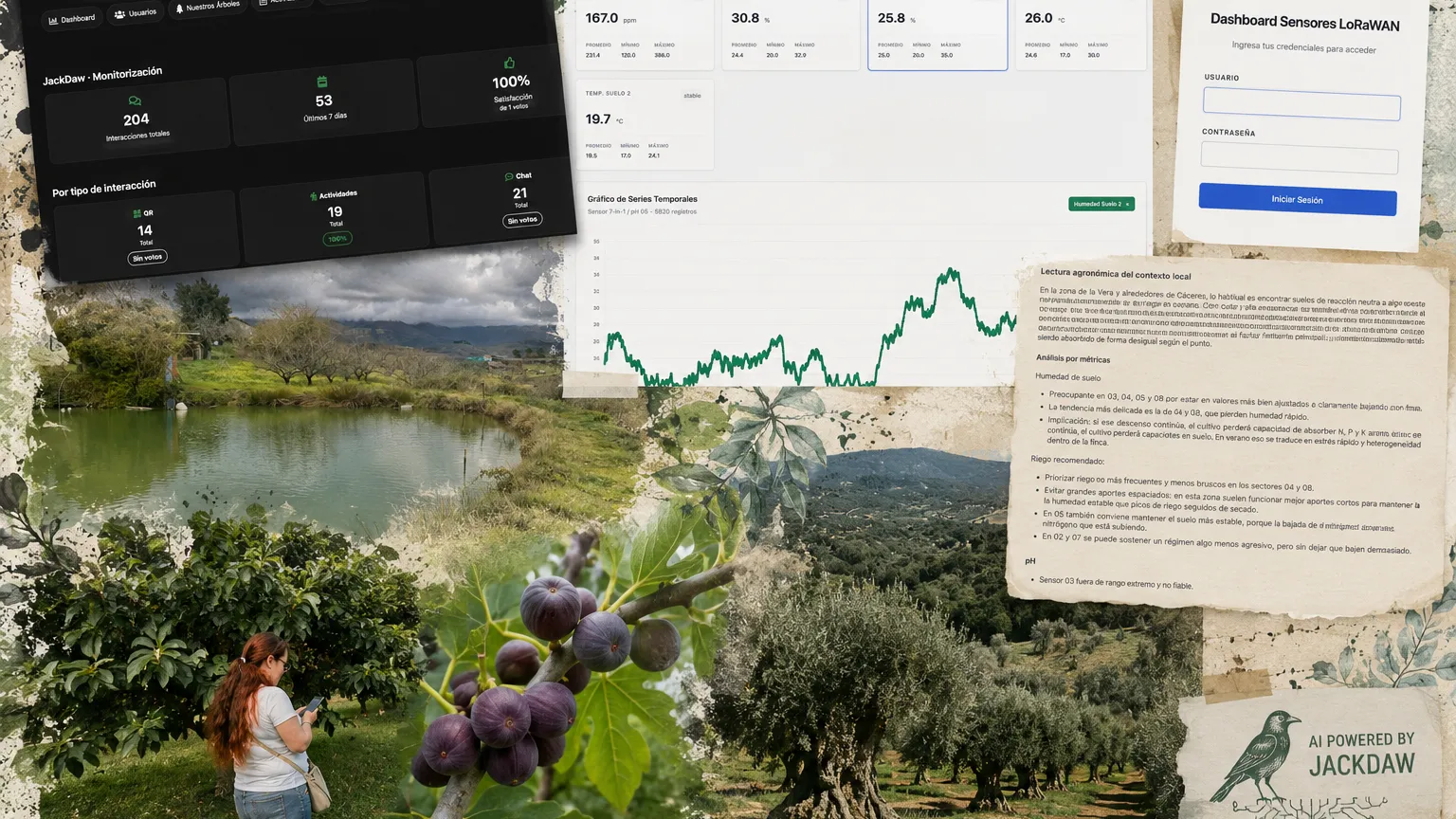
AGROJACK, one of the seven winners of the PoliRuralPlus Enhance Call, has completed its six-month validation of JackDaw, the GeoAI conversational agent of PoliRuralPlus, at the Aires de la Vera estate — a working fruit farm and agrotourism destination in the comarca de La Vera with more than 1,500 cherry, fig, plum, chestnut and olive trees.
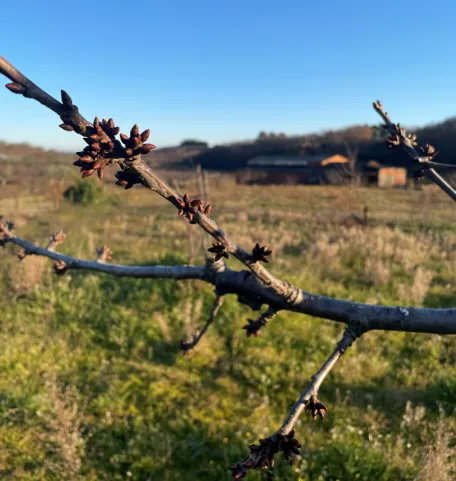
Figure 1 A cherry three ready to bloom in Aires de la Vera
Led by the Spanish SME Espacio SOA, the project set out to answer a question with real consequences for rural Europe: can a conversational AI agent serve, at the same time, the visitors who come to a farm for the experience and the people who run it? To find out, AGROJACK tested JackDaw in two real-world scenarios at once — as a geo-contextualised assistant for visitors inside the Aires de la Vera mobile app, and as a decision-support agent for farm management, fed by the estate's own environmental sensing platform.
A farm that measures itself: the AgroSens platform. The agricultural use case builds on AgroSens, Espacio SOA's multi-user environmental sensing platform, in which each farm manages its own network of probes — as many as it needs. At Aires de la Vera the platform operates six LoRaWAN soil probes installed at two depths, measuring pH, electrical conductivity (EC), NPK nutrient levels, soil moisture, temperature and salinity. Measuring at two depths matters: it reveals what is happening in the root zone, not just at the surface, which is the difference between guessing and knowing when deciding whether to irrigate or fertilise. In a region where water is an increasingly strategic resource and fertiliser costs weigh heavily on farm margins, this kind of data-driven precision is not a luxury — it is the direction European agriculture needs to take. This multi-user design means neighbouring farms can be onboarded onto the same AgroSens instance without deploying infrastructure of their own. What AGROJACK added is the missing piece: instead of dashboards that require interpretation, JackDaw turns those readings into plain-language advice a farmer can act on immediately.
Agrotourism as a digital showcase. On the tourism side, JackDaw was embedded into the Aires de la Vera app, the digital companion of the estate's agrotourism activity. Through the app, visitors can adopt a cherry tree and follow its life remotely, browse and book activities, and access multimedia content from the farm. With AGROJACK, the app now gives every visitor direct access to JackDaw: they can ask contextualised questions about the area and receive recommendations of nearby activities suited to their profile, location, the time of day and the weather — answers enriched with JackDaw's native geospatial knowledge of terrain, land cover and local climatology. The QR codes placed next to the estate's trees add a further entry point: scanning one brings up additional information about that particular tree, from its species and age to the regenerative practices behind it.
To make all this possible, AGROJACK connected the estate's data to JackDaw through the Model Context Protocol (MCP): a self-hosted server exposes QR-coded points of interest, activities, visitor profiles and live AgroSens readings as tools that JackDaw calls autonomously during a conversation — one of the first third-party MCP integrations of the JackDaw ecosystem.
The validation produced encouraging results. Three structured sessions were run with 24 visitors using the app in real conditions, producing around 50 analysed interactions (and over 200 registered over the testing period), and more than 15 agricultural interactions have been registered in the system, exceeding the project's targets. The clearest sign of impact came from the farming community: after informal on-farm sessions with more than a dozen neighbouring farmers, three of them asked for a demonstration deployment of the sensor network on their own land.
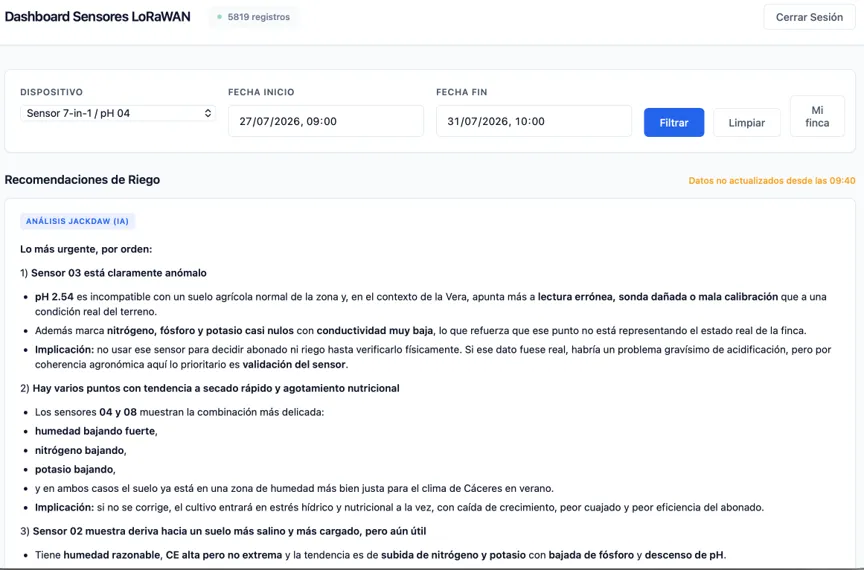
Figure 2 Jackdaw analytics through Agrosens platform
All results, lessons learned and two documented replicability pathways — one for agrotourism SMEs, one for sensor-equipped farms — are published in the project's public validation report, available through the PoliRuralPlus Hub and on Espacio SOA's website.
This project has received funding from the European Union's Horizon Europe research and innovation programme PoliRuralPlus.
PoliRuralPlus has received funding from the European Union’s Horizon Europe research and innovation programme under Grant Agreement No. 101136910. Views and opinions expressed are however those of the author(s) only and do not necessarily reflect those of the European Union or the European Research Executive Agency. Neither the European Union nor the granting authority can be held responsible for them.



Existing Comments