
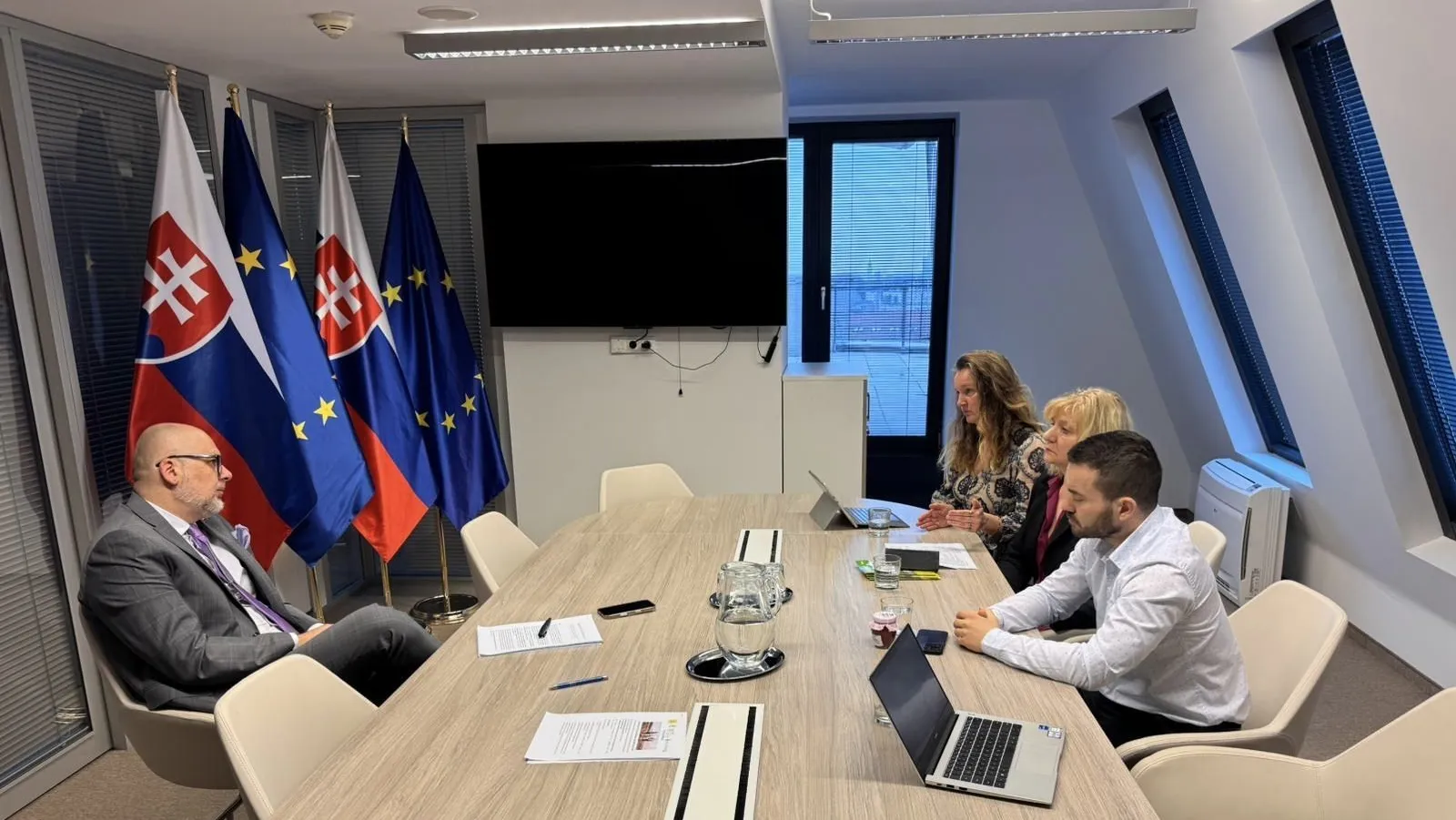
On 10 February 2026, representatives of the Slovak pilot held a working meeting with the State Secretary of the Ministry of Interior of the Slovak Republic to discuss a key structural issue affecting rural development in Slovakia: the absence of a unified legal definition of rural areas.
The discussion followed the Round Table on the Updated Vision for an Attractive Rural Slovakia 2040 and focused on translating strategic debate into concrete institutional steps.
Why Legal Definition Matters
Currently, Slovakia does not have a legally binding definition of “rural area.” While the term is widely used in strategic and sectoral documents, particularly in the framework of EU rural and regional policies, it is not normatively anchored in national legislation.
This absence contributes to:
- fragmentation of public policies,
- inconsistent application of development measures,
- limited cross-ministerial coordination,
- difficulties in assessing territorial impacts of legislation,
- weaker integration of rural perspectives into national strategies.
The State Secretary acknowledged that the issue has implications not only for agricultural policy, but also for public administration reform, regional governance, service provision, and territorial planning.
Exploring Possible Solutions
The meeting explored several potential approaches to addressing the legislative gap.
Participants discussed the possibility of incorporating a definition into national legislation, either within the framework of regional development law or through a dedicated legal act on rural development.
A hybrid approach was presented as a potential solution, combining:
- statistical classification (e.g. EU DEGURBA methodology),
- population density thresholds,
- functional and socio-economic characteristics of territories.
Such a definition would provide clarity while allowing flexibility for future updates.
From Dialogue to Policy Action
The meeting marked an important step in elevating the discussion from strategic reflection to institutional consideration. It demonstrated growing awareness at the governmental level that rural development requires clearer legal anchoring and stronger policy coherence.
The outcomes of the discussion will inform further work within the Slovak pilot and contribute to ongoing debates about integrating rural perspectives into Slovakia’s long-term development planning.
By addressing the legislative foundations of rural policy, Slovakia can move toward a more integrated, future-oriented and territorially balanced development model, ensuring that rural areas remain central to the country’s resilience and prosperity.



Existující komentáře