
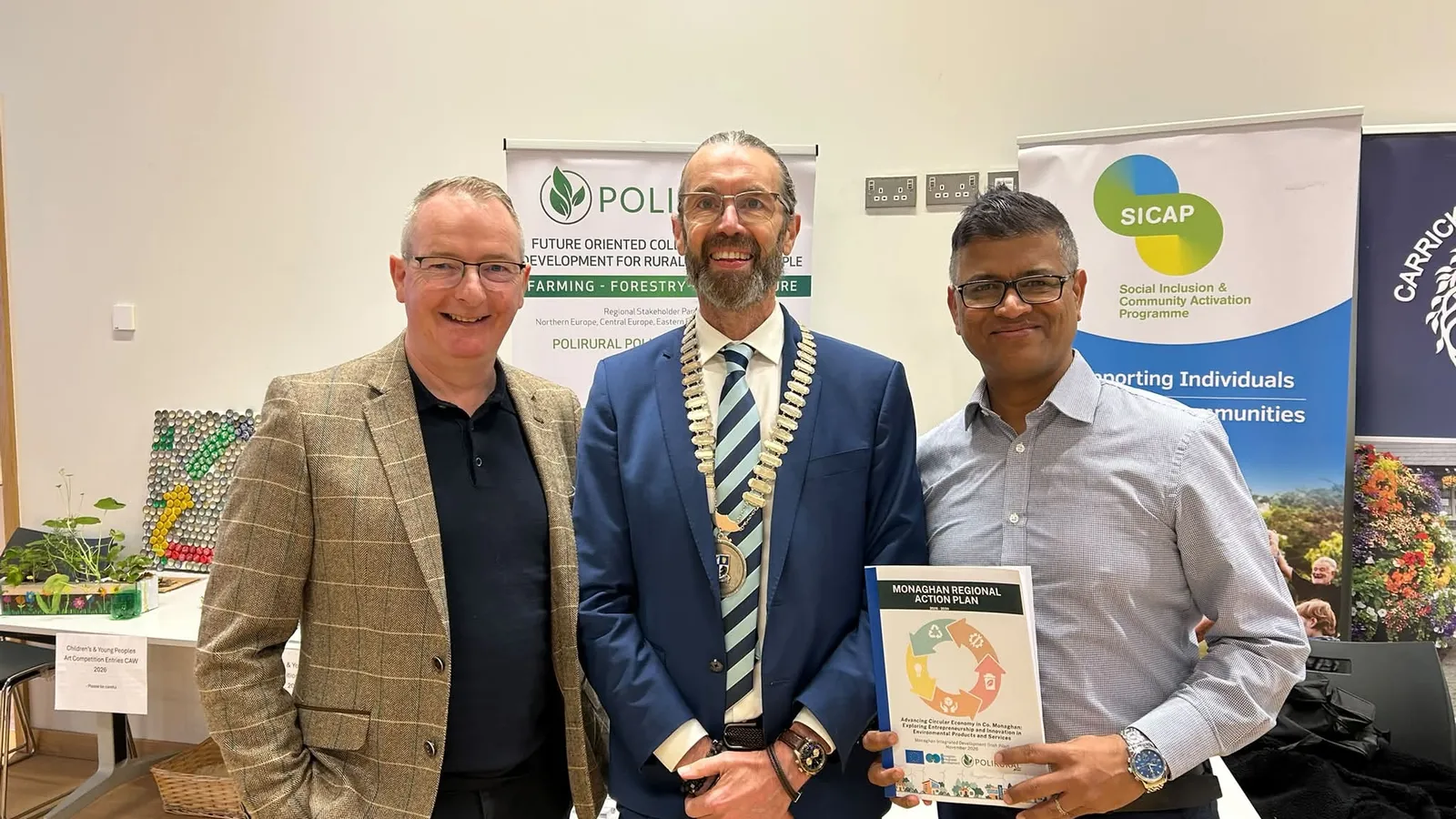
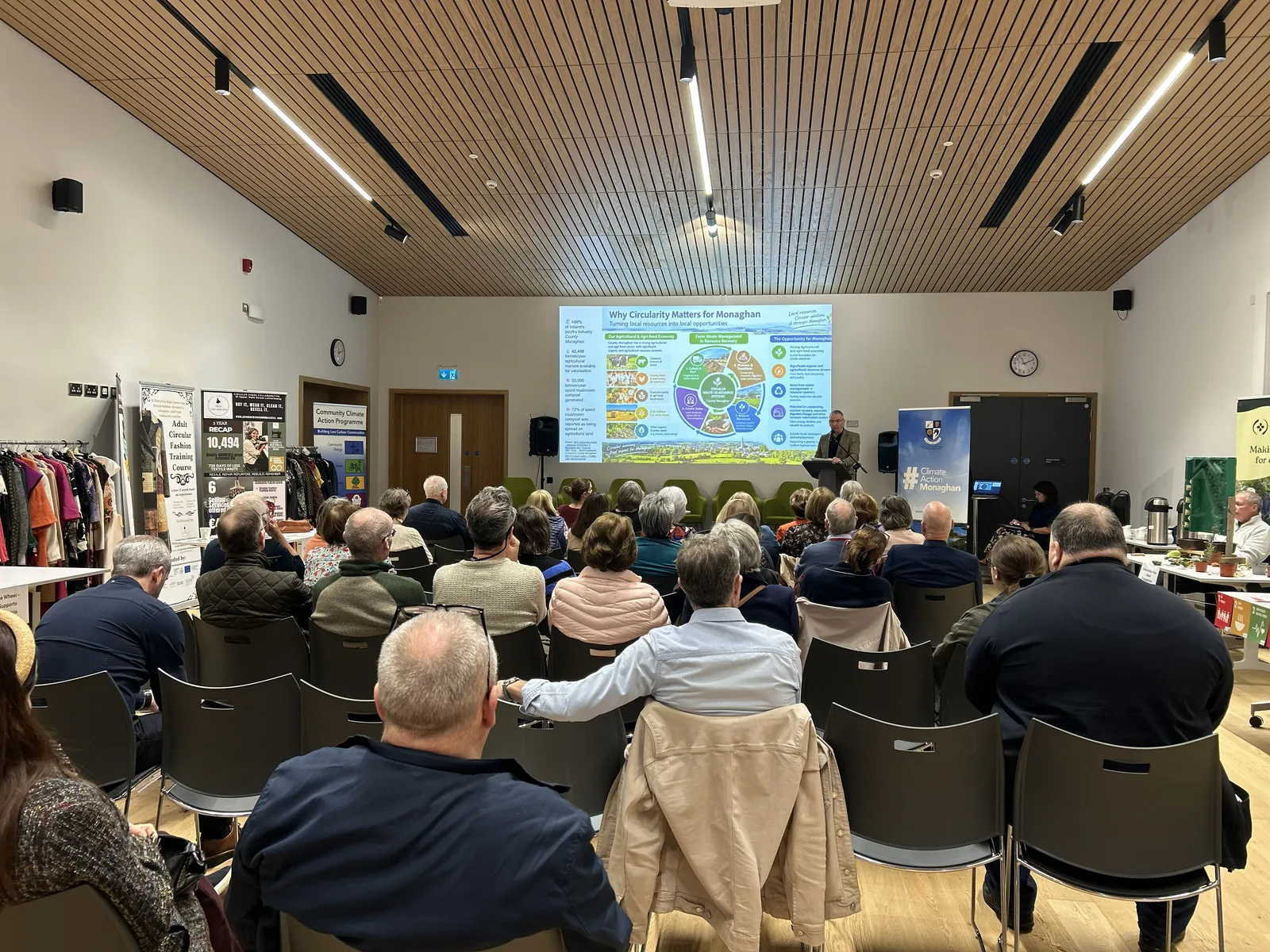
The Irish pilot of PoliRuralPlus was highlighted at the Circular Economy in Action Conference 2026: Rethink, Repair, Reuse, hosted by Monaghan County Council at the Monaghan Peace Campus on 17 October 2026. The conference brought together regional policymakers, public bodies, community organisations, social enterprises, businesses and other stakeholders to explore practical approaches to building a more sustainable and climate-resilient County Monaghan.
As the closing event of Climate Action Week 2026, which featured more than 50 climate-related events across the county, the conference provided an important opportunity to strengthen connections between local initiatives, regional development priorities and the wider transition towards a circular economy.
For the PoliRuralPlus Irish pilot, the event demonstrated the value of a multi-actor, multi-sector approach to rural development, bringing together different perspectives and experiences to identify shared challenges, explore opportunities and translate regional priorities into practical action.
Connecting the PoliRuralPlus Irish Pilot with Regional Action
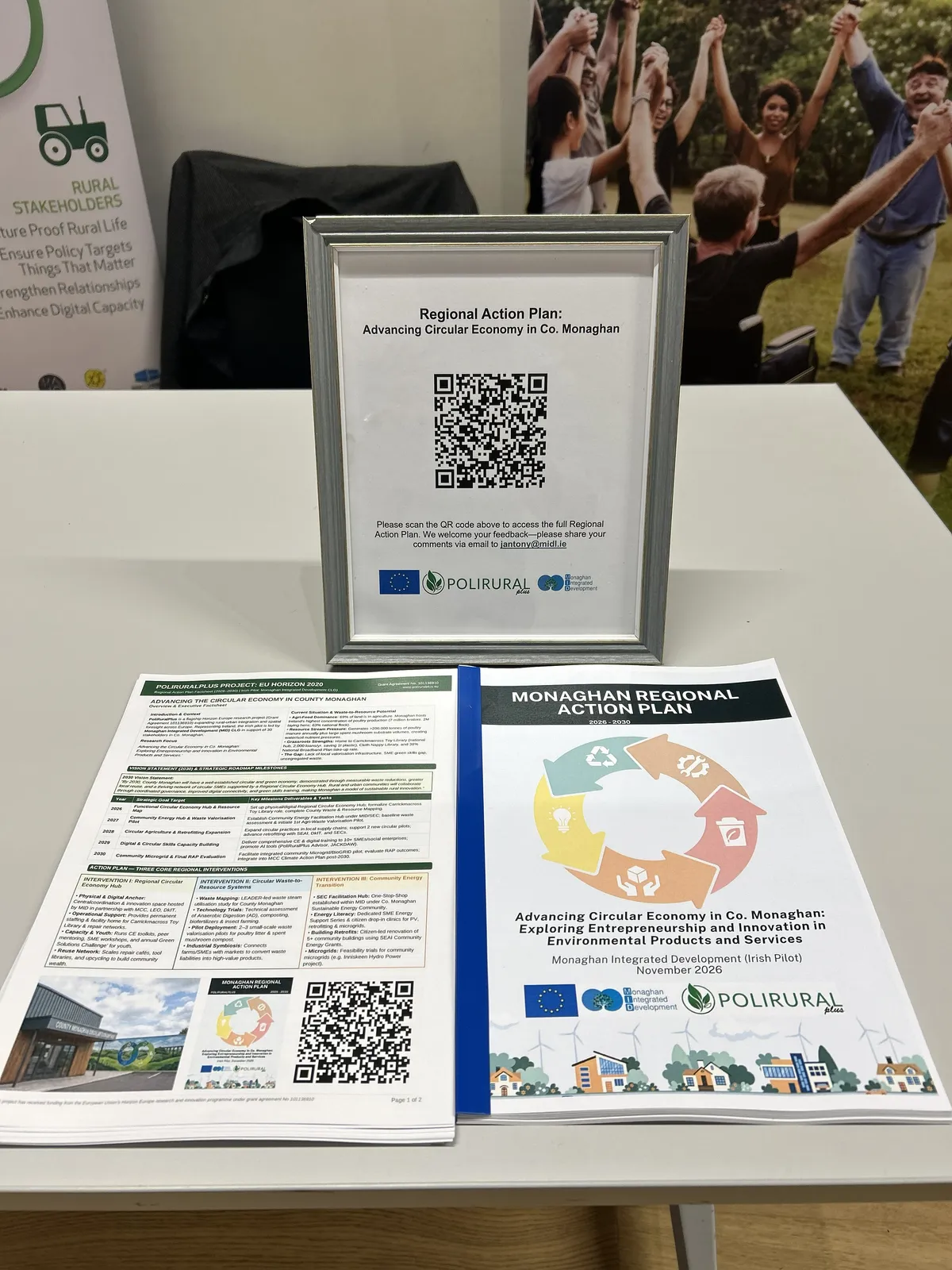
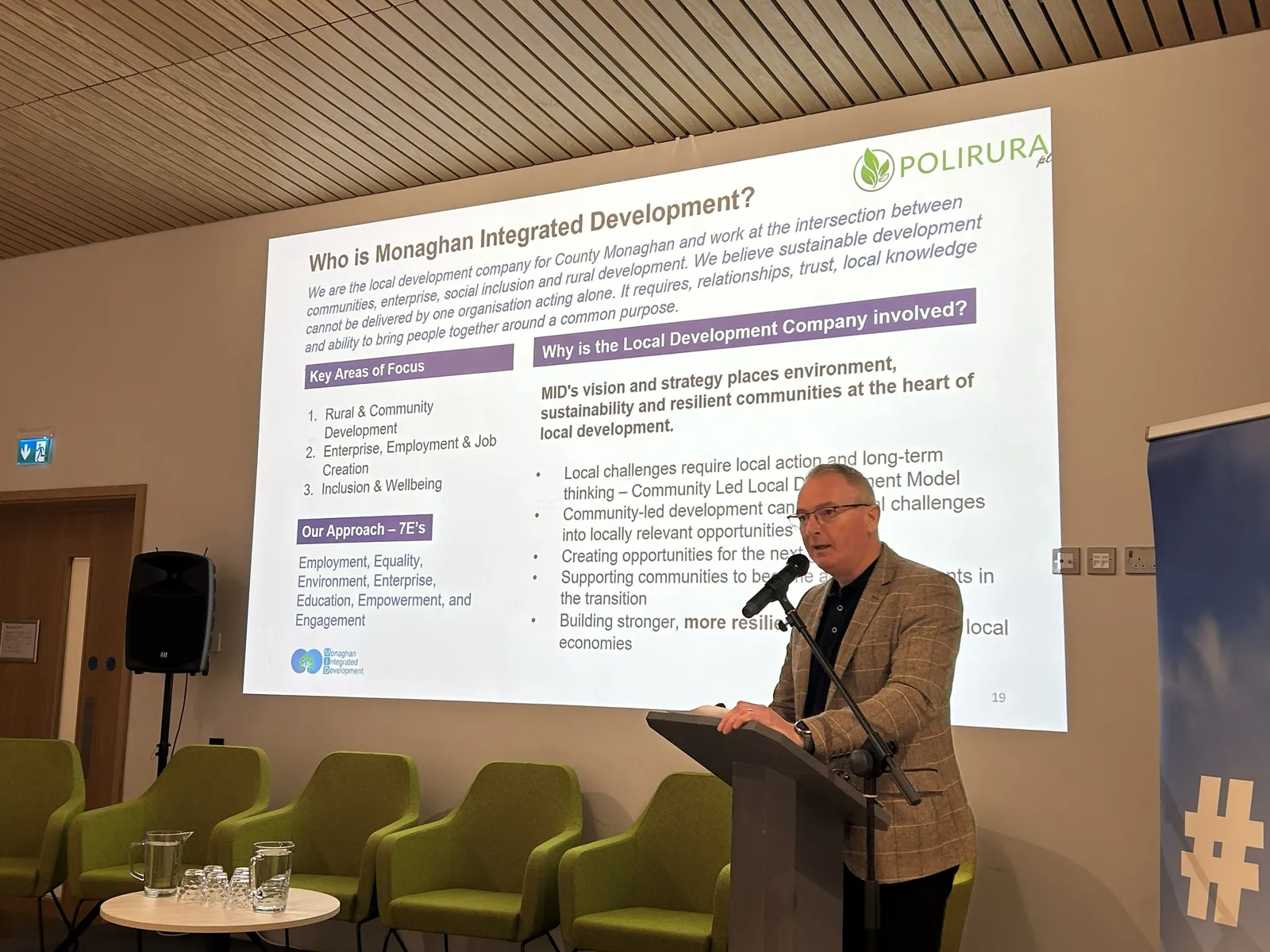
A key highlight of the conference was a presentation by Kilian Cawley, Chief Executive of Monaghan Integrated Development (MID), introducing the Irish pilot's Regional Action Plan (2026–2030) and its proposed interventions to advance the circular economy in County Monaghan.
Developed through the PoliRuralPlus project, the Regional Action Plan reflects a place-based approach to sustainable development. It seeks to build on the county's existing economic strengths, community networks and local knowledge while encouraging cooperation across sectors and between rural and urban stakeholders.
The plan identifies opportunities to connect environmental sustainability with enterprise development, community participation, skills development and the more efficient use of local resources. Its interventions illustrate how regional priorities can be translated into collaborative initiatives with potential benefits for local communities, businesses and the wider territory.
Three key interventions were presented
- 1) Regional Circular Economy Knowledge Hub
The proposed hub aims to strengthen cooperation among regional stakeholders, facilitate knowledge exchange, support green skills development, and encourage community-led repair, reuse and youth entrepreneurship initiatives. It is intended to provide a focal point for connecting community organisations, businesses, educational actors and public bodies around circular economy opportunities.
- 2) Circular Waste-to-Resource Systems
Building on County Monaghan's strong agricultural and agri-food sectors, this intervention explores opportunities to transform organic waste and by-products into valuable resources, including bio-based products, compost and renewable energy. It highlights the potential for collaboration between farmers, food businesses, researchers, enterprises and other regional actors to support resource efficiency and new economic opportunities.
- 3) Community Energy Transition
Through the Community Energy Engagement Hub (CEEHub), the plan seeks to improve energy awareness, help households and community groups navigate available support, encourage building energy upgrades and explore opportunities for community-based energy initiatives. This intervention connects local energy action with wider objectives for climate resilience, affordability and sustainable communities.
Together, these interventions demonstrate how the Irish pilot is exploring practical connections between environmental, economic and social priorities through a coordinated regional approach.
A Multi-Actor Approach to Circularity and Rural-Urban Development
The conference's discussions reflected a central principle of PoliRuralPlus: sustainable regional development requires cooperation between actors who bring different knowledge, resources and experiences to the process.
Opening remarks from Cllr Aidan Campbell, Mayor of Monaghan County Council, and Robert Burns, Chief Executive of Monaghan County Council, highlighted the importance of connecting local action with wider climate and regional policy objectives.
Keynote speaker Claire Downey, Chief Executive of The Rediscovery Centre, addressed Ireland's circularity challenge and the need to extend product lifespans through repair, restoration and reuse. The conference provided a practical setting in which these wider challenges could be considered alongside community initiatives and regional development opportunities.
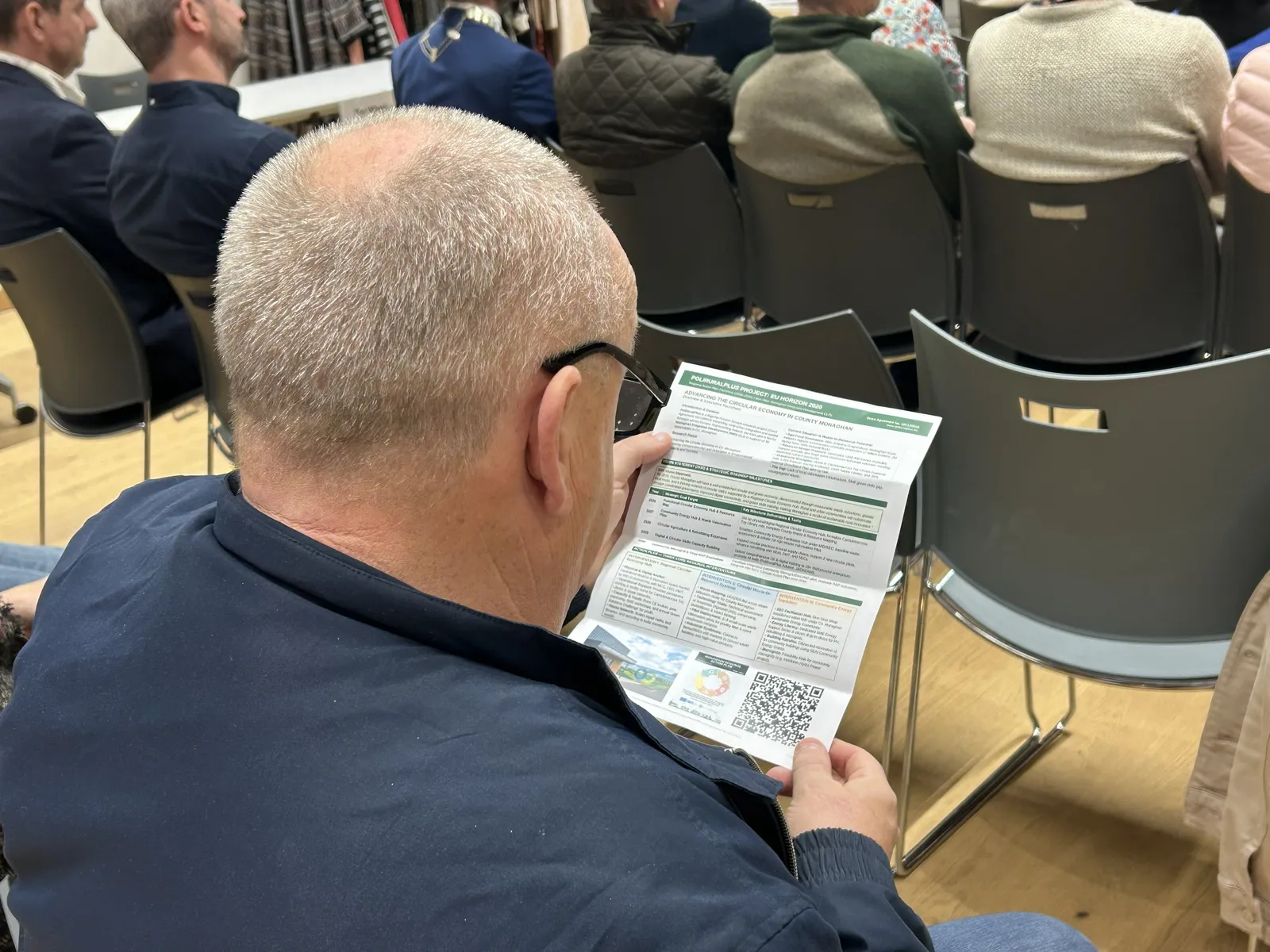
Many stakeholders connected with the PoliRuralPlus Irish pilot attended the conference, contributing to a wider exchange of ideas and experiences across sectors. Their participation helped create opportunities to connect the Regional Action Plan with existing activities, identify potential areas for collaboration and strengthen relationships between community-led initiatives and regional development processes.
The event also illustrated the importance of rural-urban linkages. Agricultural and agri-food businesses, community organisations, local enterprises, public authorities and residents all have a role to play in developing circular systems that make better use of resources, support local livelihoods and improve environmental outcomes.
Local Initiatives Demonstrate Circular Economy in Practice
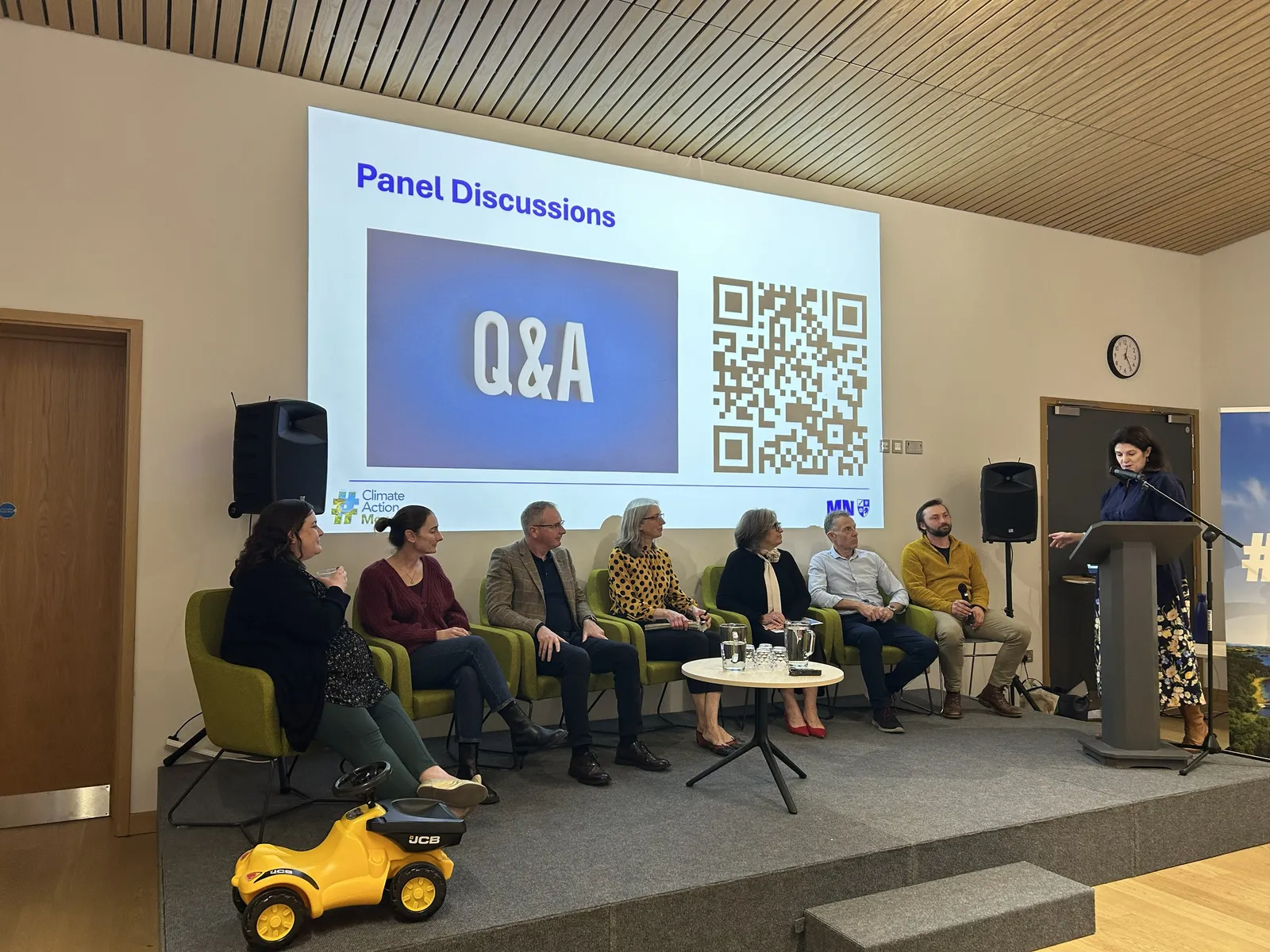
The conference's panel discussion, moderated by Louise Cullen, Agriculture and Environment Correspondent at BBC Northern Ireland, explored how circular practices can be developed and expanded across different sectors.
Contributors included Jill Kennon of Carrickmacross Toy Library, Sheila Clancy O'Donnell of Circular Dress Collaborative, Kevin McGuire of Genesis Coffee Shop and Emma Murtagh of The Wheel, alongside representatives from Monaghan Integrated Development.
The discussion showcased the diversity of local approaches to sustainability, from reuse and sharing initiatives to social enterprise, responsible retail and community services. These examples reinforced the importance of linking regional strategies with practical activities that people and organisations can adopt in their everyday work.
The Ideas Hub exhibition offered further examples of community-led action, including:
- The Hub Furniture, Monaghan: furniture restoration and upcycling.
- Carrickmacross Toy Library: sharing toys and extending their useful life for local families.
- Carrickmacross Tidy Towns: community bicycle repair workshops.
- Monaghan Tidy Towns Youth Team: youth-led initiatives linked to the Sustainable Development Goals.
- Hannah McElroy of Rua Designs: environmentally conscious textile painting.
- NOW Group and Global Action Plan: green economy qualifications and community seed propagation activities.
These initiatives illustrate how circular economy principles can be put into practice through community participation, skills development, social innovation and local partnerships. They also provide examples of approaches that can inform wider discussions about sustainable regional development.
From Regional Priorities to Collaborative Action
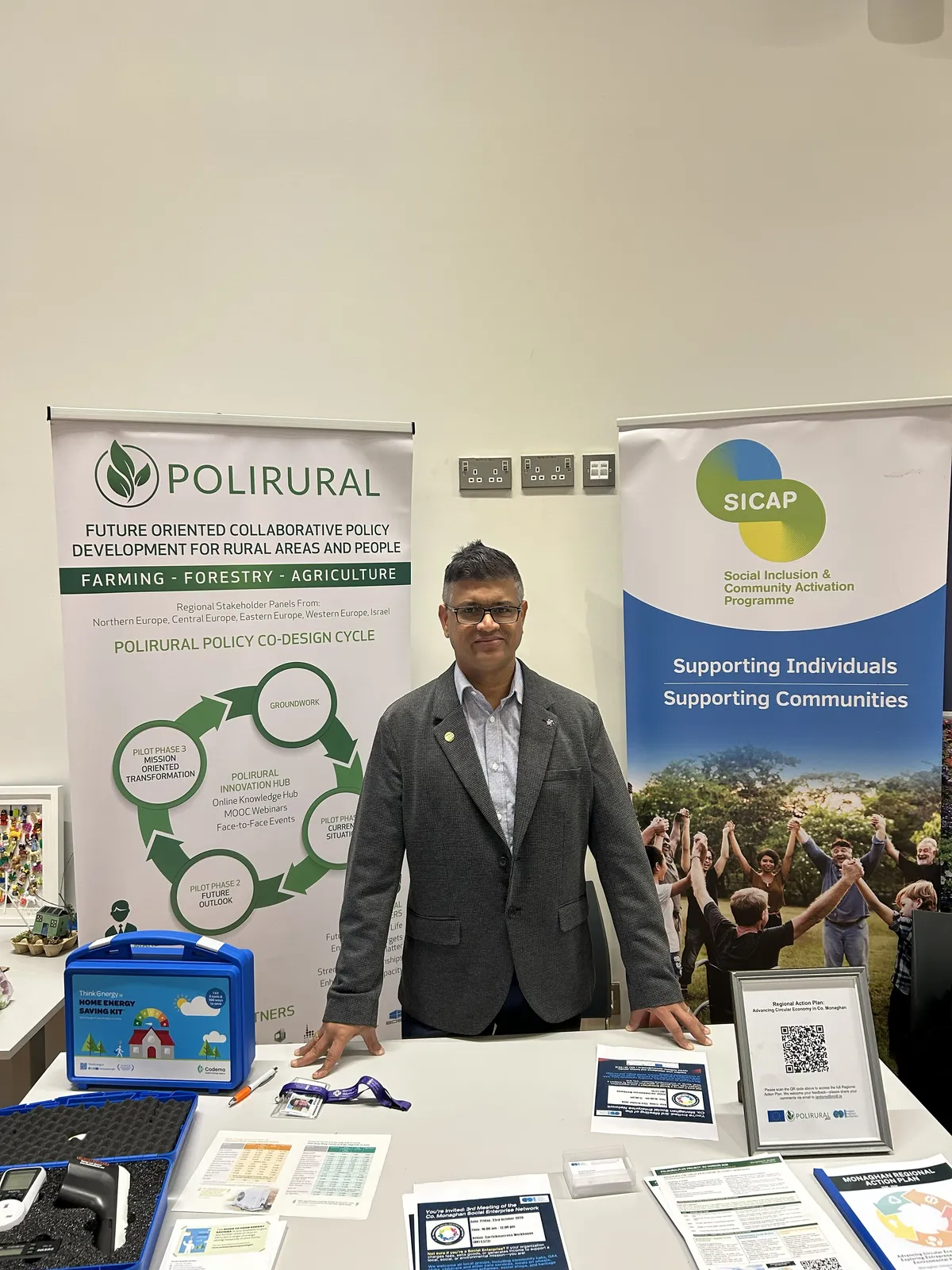
Throughout the conference, EU Project Coordinator Jeyald Antony Rasaratnam engaged with attendees at MID’s information stand, providing guidance on practical energy-saving measures, SEAI Warmer Homes support, Home Energy Toolkits, and opportunities to contribute to the Irish pilot’s Regional Action Plan.
The stand complemented the conference’s wider discussions by linking regional ambitions with practical information and resources for households, community groups and other local actors.
For PoliRuralPlus, this kind of engagement supports the development and implementation of Regional Action Plans by bringing diverse perspectives together, sharing knowledge and connecting existing initiatives with regional priorities. It helps ensure that local experience and stakeholder input can inform actions that respond to the needs and opportunities of the region.
The Monaghan conference highlighted how cooperation across sectors can help turn circular economy ambitions into practical action. It also demonstrated the potential for community organisations, businesses, public authorities and other local actors to work together on solutions that address local needs while contributing to wider European sustainability objectives.
The Irish pilot's Regional Action Plan provides a framework for continuing this work, connecting circular resource management, community energy, enterprise development and knowledge exchange within a shared regional vision.
Contact: For further information about the Irish pilot and its Regional Action Plan, contact Monaghan Integrated Development at jantony@midl.ie.


Existující komentáře