
Kythera’s agriculture has always been a balancing act between scarcity and ingenuity. The island’s land is often described as barren and low yield, yet it has supported generations of farmers and livestock keepers through careful cultivation, mixed farming, and a deep understanding of local conditions. Today, farming activity is more limited than it once was, but it remains stable and quality-driven, with organic farming reported as steadily increasing.
What “sustainable farming” means on an island
On islands like Kythera, sustainability is not an abstract slogan. It is a practical strategy for surviving high input costs, remoteness from markets and services, and the demographic reality of out-migration, particularly among younger people. These pressures are explicitly recognised by initiatives such as Terra Kytheria, which frames the sector as being “in crisis” and links sustainability to the ability to maintain livelihoods while conserving on-farm biodiversity and agricultural landscapes. In other words, if sustainability doesn’t also help farmers stay in business, it won’t stick.
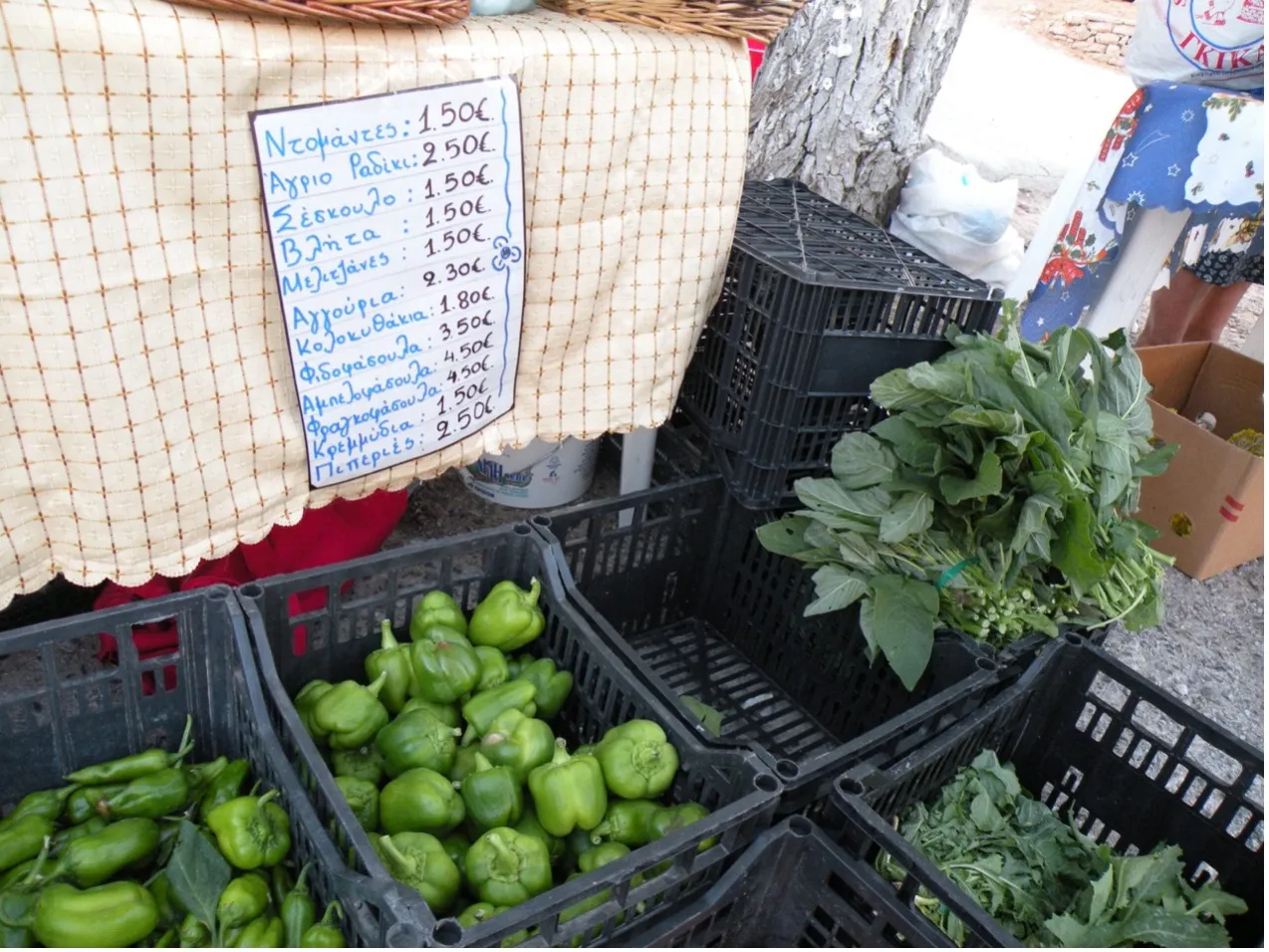
(source: visitkythera.com)
Working with the landscape, not against it
Kythera’s farming identity is strongly tied to perennial systems and diverse small-scale production. Olive trees, vines, and a wide range of fruit and nut trees are part of the local agricultural mosaic, alongside cereals and legumes such as fava beans and lentils. In these conditions, sustainable practice often starts with soil and water stewardship: keeping ground cover where feasible to protect against erosion, building organic matter with composted residues, and using pruning and grazing in ways that reduce fire risk and maintain productive groves without exhausting the soil. The goal is to keep soils “alive” and resilient, so yields do not depend on heavy external inputs that are expensive and logistically hard to secure on an island.
(source: visitkythera.com)
Biodiversity-friendly olive growing as a real, local pathway
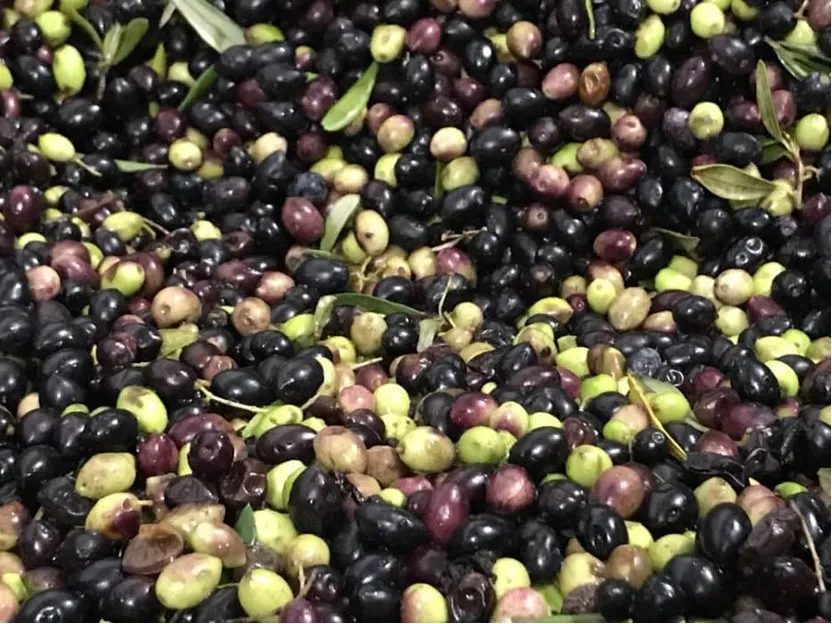
One of the most relevant local reference points for Kythera is Terra Kytheria, which aimed to revitalise the agri-food sector through a biodiversity-friendly farming and certification system, focused on olive growers and higher value olive oil. The project combined biodiversity monitoring and a management standard for Kytherian olive groves with digital support tools, including an online geodatabase and a smartphone app intended to help farmers and facilitate certification. The key lesson here is blunt: sustainability becomes actionable when it is translated into clear management standards, measurable indicators, and market recognition, not when it stays at the level of good intentions.
Pollinators, herbs, and the hidden value of “low input” systems
Kythera’s best-known product is often cited as honey, with thyme abundant on the island and serving as a main food source for bees, shaping the honey’s distinctive character. This matters for sustainability because pollinator-friendly landscapes are not just “nice to have”; they underpin production quality and differentiation. Maintaining aromatic plant habitats and avoiding practices that wipe out flowering diversity can directly support beekeeping, orchard productivity, and the island’s wider ecological health. In practical terms, this points toward integrated pest management, cautious and targeted interventions, and a general preference for farming approaches that preserve beneficial insects and ground flora rather than sterilising the landscape.
(source: https://dask-agri.netlify.app )
Where DASK fits: turning sustainable practice into daily habit
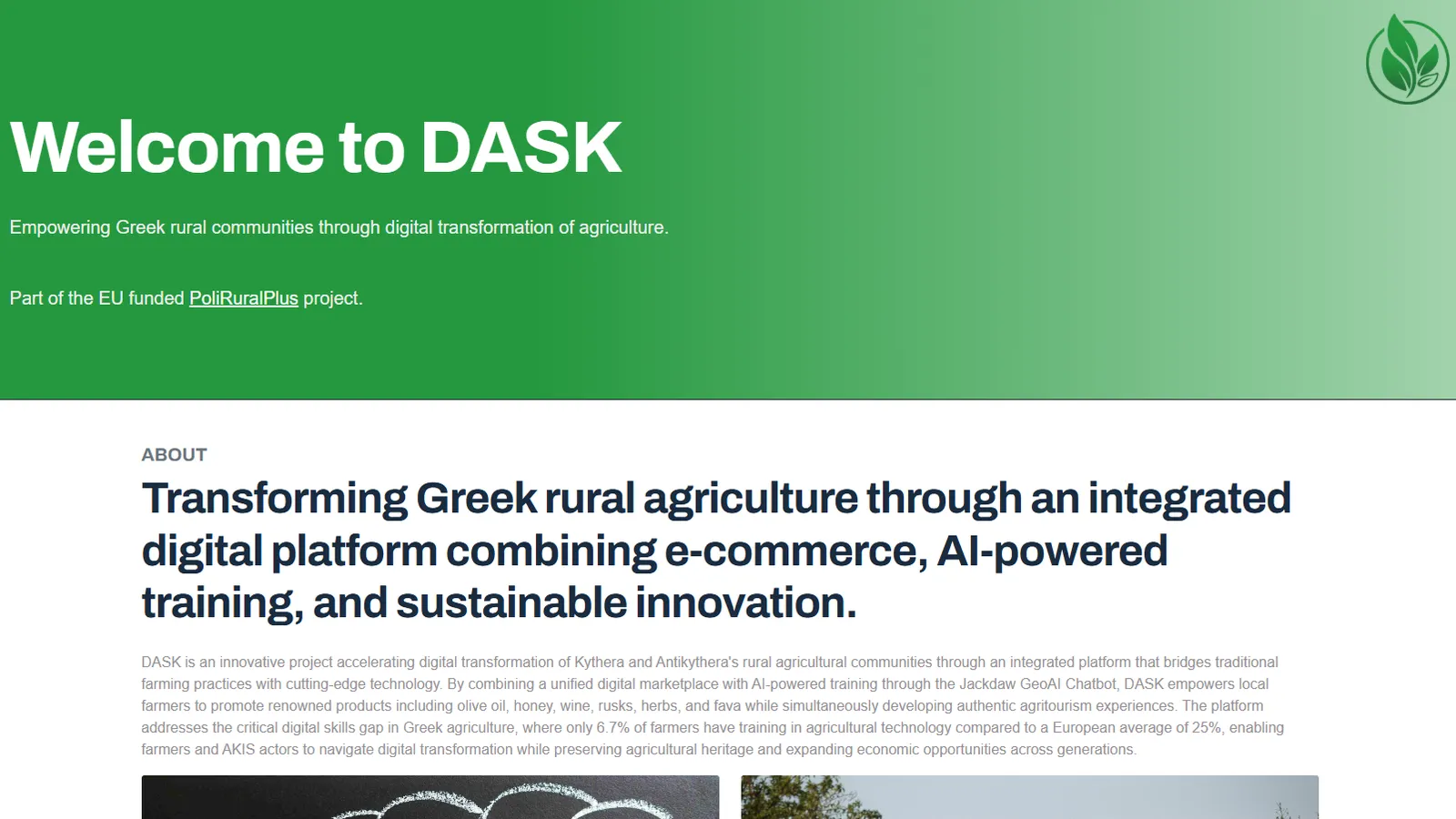
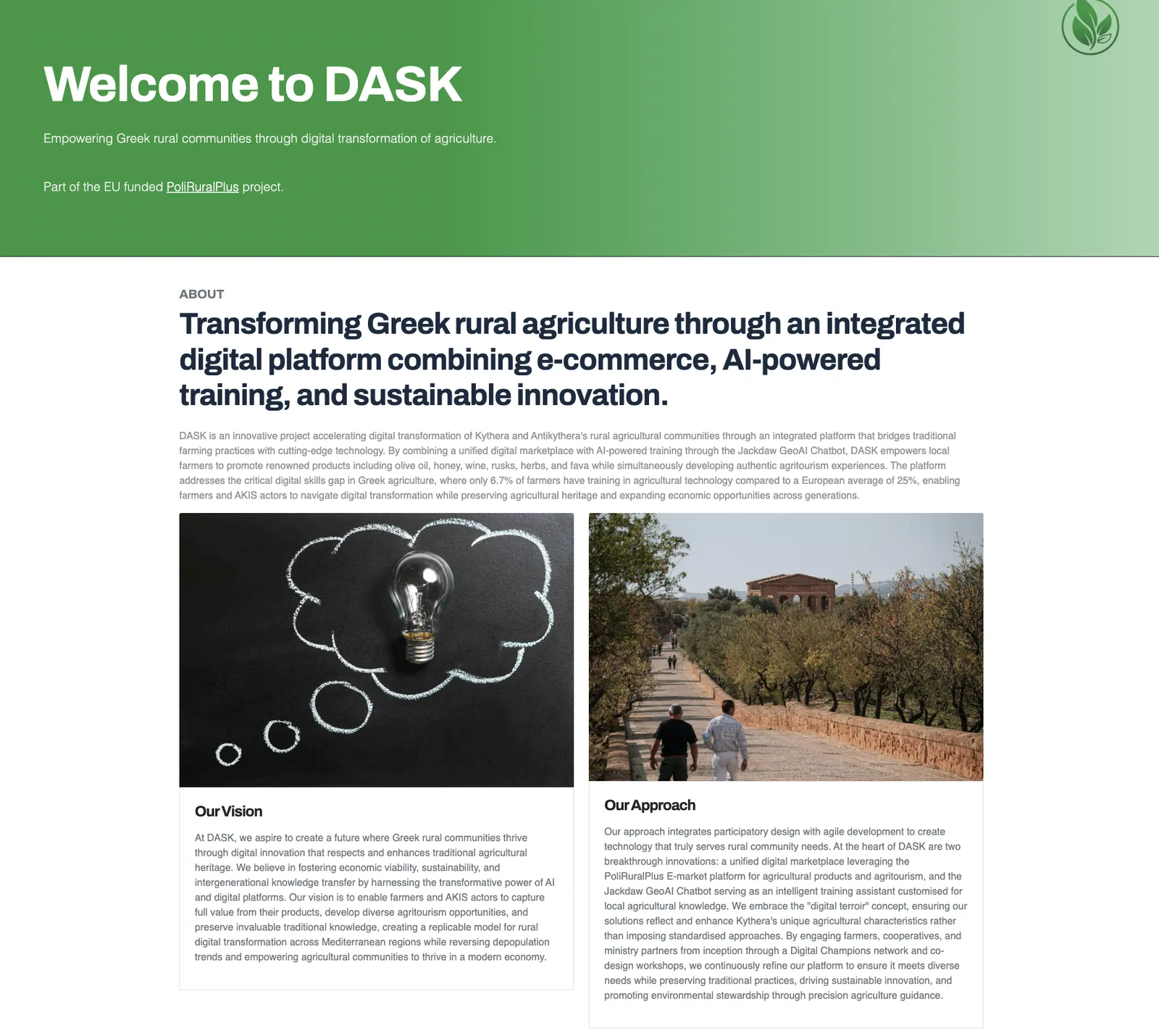
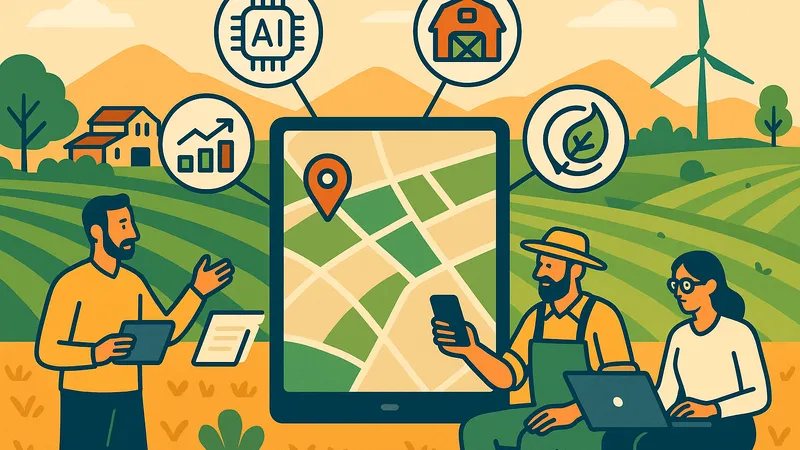
This is exactly where DASK’s approach becomes useful, because it connects sustainability to two things farmers need: capability and market access. The DASK website describes an integrated platform combining a unified digital marketplace with AI-powered training through the Jackdaw GeoAI Chatbot, aiming to bridge traditional practices with modern tools while promoting products such as olive oil, honey, wine, rusks, herbs and fava, and supporting agritourism experiences. It also explicitly adopts the “digital terroir” idea: technology should reflect Kythera’s unique agricultural characteristics rather than impose a generic template.
If we are honest, “sustainable practices” often fail to scale because they are time-consuming to learn, hard to troubleshoot, and rarely rewarded consistently in the market. DASK targets that bottleneck head-on, because it positions training and guidance as something farmers can access on demand, in the same place where they promote and sell. The website also highlights the wider digital skills gap in agriculture, citing that only 6.7% of farmers have training in agricultural technology compared to a European average of 25%. Whether that gap is closed through formal courses or everyday micro-support conversationally, the direction is the same: sustainability improves when farmers can make better decisions faster, with fewer trials that cost money.
Sustainability plus identity equals resilience
Kythera doesn’t need to copy an industrial model to be “modern.” The more credible path is to professionalise what the island already does well: quality-focused olive oil and honey, small-scale diversified production, and authentic food-and-farm experiences that tie products to place. DASK’s platform logic supports this by linking environmental stewardship, skills development, and value capture in one ecosystem, and by helping farmers communicate practices and provenance in a way that markets can understand and reward.
The real test, of course, is adoption. If the tools remain “digital nice-to-haves,” nothing changes. If they become the easiest way for a Kytherian producer to learn, comply, market, and sell, then sustainable farming stops being a side project and becomes the default.
Existující komentáře